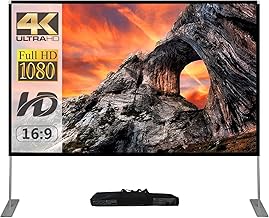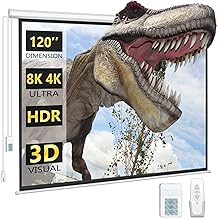
The transition from a standard TV setup to a dedicated home theater often hinges on one critical component: the screen. While fixed screens offer pristine image quality, nothing matches the convenience and sleek aesthetics of an automated projector screen. These motorized units retract silently into a ceiling or wall casing when not in use, preserving the room’s design and protecting the delicate viewing surface.
Choosing the right automated screen involves more than just selecting a size; you must consider the motor type, installation method, screen material, and control options. This comprehensive guide breaks down the essential features of the best motorized screens available today, focusing on models that deliver exceptional performance without completely breaking the bank. Whether you are building a dedicated cinema room or upgrading a multi-purpose living space, an automated projector screen provides the ultimate blend of luxury and functionality.
Why Choose an Automated Projector Screen?
The primary appeal of an automated projector screen lies in its unparalleled convenience. With the push of a button—or even a voice command, depending on the model—the screen deploys precisely when you need it and disappears just as quickly. This seamless operation offers several significant advantages over traditional pull-down or fixed frame screens.
The Convenience Factor: Aesthetics and Protection
Aesthetics: In modern homes, few people want a large white rectangle dominating their living room wall 24/7. Automated screens solve this problem by integrating discreetly into the architecture. Ceiling-recessed models vanish entirely, leaving only a small, barely noticeable trim plate. This makes them ideal for multi-use rooms where the screen must coexist with everyday décor.
Screen Protection: Projection surfaces are sensitive to dust, oils, and environmental factors. When retracted into its durable casing, the screen material is protected from damage, ensuring a longer lifespan and maintaining optimal image quality. This protection is especially valuable for high-end, tensioned, or ambient light rejecting (ALR) materials.
Types of Motorized Screens
Automated screens are categorized primarily by their installation method:
Wall and Ceiling Mount Screens
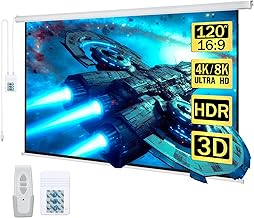
These are the most common type of motorized projector screen. The casing is mounted directly to the wall or ceiling surface. They are relatively easy to install and usually offer both RF (Radio Frequency) remote control and wall switch operation. Look for models with an adjustable drop distance, allowing you to position the viewing area perfectly above furniture or windows.
Recessed (In-Ceiling) Screens
For a truly custom, high-end look, recessed screens are the choice. The screen housing is installed inside the ceiling structure before the drywall is finished. When retracted, the screen is completely invisible. While installation is more complex and usually requires professional assistance, the result is a flawless, integrated home cinema experience.
Floor Rising Screens
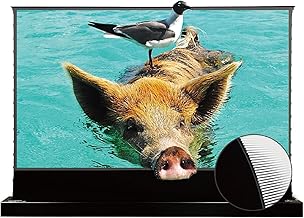
These unique automated projector screens are housed in a long, heavy casing that sits directly on the floor. They are perfect for situations where wall or ceiling installation is impossible (e.g., glass walls or rental properties). The screen rises vertically from the casing via a motorized mechanism. Many modern floor-rising screens feature tensioning systems and are specifically designed for Ultra Short Throw (UST) projectors, making them a premium, versatile option.
Key Components of Automation
The heart of an automated projector screen is the motor and control system. The motor quality dictates the screen’s speed, noise level, and longevity. Look for silent or tubular motors, which are designed for smooth, quiet operation. The control options typically include:
- RF Remote Control: Standard wireless control, often capable of operating the screen from adjacent rooms.
- 12V Trigger: A low-voltage connection that synchronizes the screen’s deployment with the projector’s power cycle. When the projector turns on, the screen drops automatically.
- IR Remote: Requires line-of-sight but is useful for integrating with universal remote systems.
- Smart Home Integration: High-end models often connect to Wi-Fi, allowing control via smartphone apps, voice assistants (Alexa, Google Home), or home automation hubs (Control4, Crestron).
Critical Factors When Buying an Automated Screen
Beyond the mechanism, the quality of the viewing surface itself is paramount. A motorized screen must maintain perfect flatness to prevent image distortion, especially with 4K and 8K projectors.
Tensioning Systems: The Key to Flatness
A non-tensioned screen will often suffer from “curling” or ripples, especially in large sizes or fluctuating temperatures. Tensioned motorized projector screens use thin cables or tabs along the sides of the material, pulled taut by springs or weights within the casing. This ensures a perfectly flat viewing surface, which is essential for maintaining image integrity and sharpness.
Screen Material and Gain
The material affects how light is reflected back to the viewer. This is defined by its “gain.”
- Matte White (Gain ~1.0): The most common, offering a wide viewing angle and accurate color reproduction. Ideal for dedicated dark rooms.
- High Gain (Gain >1.0): Brightens the image but narrows the viewing angle. Useful in rooms with lower-output projectors.
- Ambient Light Rejecting (ALR): Designed with micro-structures that absorb light coming from the sides and ceiling while reflecting light from the projector (usually mounted below or above). This is crucial for viewing in rooms with ambient light. If you plan to use your screen during the day, invest in an ALR screen, even if it pushes the budget slightly.
Aspect Ratio and Size Considerations
The standard aspect ratio for modern home cinema is 16:9 (widescreen HDTV format). However, some older projectors or commercial installations might use 4:3. Ensure the screen ratio matches your projector’s native output to avoid unused screen area or scaling issues. Size (diagonal measurement) should be chosen based on your viewing distance and room dimensions. A good rule of thumb is that the viewing distance should be approximately 1.5 to 2 times the screen height.
Top Rated Automated Projector Screens Under Budget
We have selected a range of top-rated automated projector screens, balancing performance, reliability, and cost. While true high-end motorized screens can cost thousands, the “Under Budget” selection focuses on excellent value across various feature sets, including affordable entry-level motorized units and premium options that justify their price with advanced features like ALR or floor-rising functionality.
Entry-Level Motorized Screens (Under $150)
These screens offer basic remote functionality and reliable drop-down mechanisms, perfect for users new to automated setups or those prioritizing size over advanced features like tensioning.
Kshioe Motorized Projector Screen with Remote Control (92-inch)
This is a highly budget-friendly option for those seeking the convenience of automation without a high investment. It features remote control operation and is suitable for standard wall/ceiling mounting. It’s an excellent choice for casual home theater use in light-controlled environments.

Pyle 72″ Portable Motorized Matte White Projector Screen
The Pyle 72-inch model provides automatic projection in a compact size, making it suitable for smaller rooms or offices. Its matte white surface offers a good viewing experience, and the motorized operation adds a touch of professionalism to any presentation or movie night.

Pyle 84″ Motorized Projector Screen
Stepping up slightly in size, this 84-inch Pyle screen offers the same reliable motorized functionality. It features a 4:3 aspect ratio, which may appeal to those using older presentation equipment or specific video formats. The automatic pull-down mechanism is simple and dependable.

Mid-Range Motorized Screens ($150 – $200)
The mid-range provides larger sizes (100-120 inches) and often includes better motor quality and more refined remote control options, offering the best overall value for most home theater enthusiasts.
WASJOYE 100 Inch Motorized Projector Screen
This screen provides a great balance of size and automated function for under $120. It is a solid 100-inch option featuring remote control operation, making it ideal for standard 16:9 home cinema setups where ease of use is key. The installation is straightforward for wall or ceiling mounting.

100 Inch Motorized Projector Screen (16:9 HD Electric)
Offering a clean, white casing and simple remote control, this 100-inch screen is designed for hassle-free installation. It supports 4K HD projection and is an excellent option for upgrading a living room or basement theater to motorized convenience.

DINAH 120 Inch Electric Projector Screen with Remote
For those needing a larger display, the DINAH 120-inch screen delivers. It is an electric projector screen with remote control, offering automatic drop-down functionality for a truly cinematic experience. The large size is ideal for medium to large viewing rooms.
Aoxun 120 Inch Motorized Retractable Projector Screen
This 120-inch motorized screen offers a 4:3 aspect ratio, catering to users needing a squarer image format. Its retractable design ensures the screen is protected when not in use, making it a reliable and long-lasting automated projector screen solution for classrooms or conference rooms as well as home use.

VIVOHOME Motorized Projector Screen (100-inch)
The VIVOHOME 100-inch screen is a dependable choice in the motorized category. It features an auto electric mechanism and remote control, ensuring smooth, consistent operation. This model is highly rated for its ease of installation and excellent value in a standard 16:9 format.
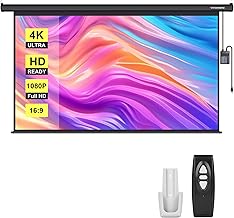
Motorized Projector Screen Pull Down 100 Inch (Automatic)
Another strong contender in the 100-inch category, this screen focuses on providing a clean, wrinkle-free viewing experience via its automatic pull-down system. It’s built for simple wall or ceiling mounting and is compatible with modern 4K projectors.
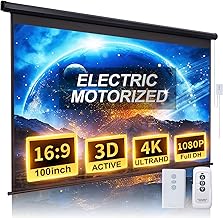
Kayle 120″ Motorized Projector Screen Electric
The Kayle 120″ screen combines a large diagonal size with an electric, automatic projection mechanism. Designed for 16:9 HD viewing, it is a versatile screen suitable for home theaters, presentations, or educational settings, offering reliable performance and convenient remote operation.

VEVOR Motorized Projector Screen, 120 inch
VEVOR offers a robust 120-inch electric projector screen that handles 4K and 1080p content beautifully. With remote control operation and a durable design, this screen is an excellent choice for creating a large-scale home theater without the cost associated with high-end tensioned models.

Premium Automated Options (Focus on Features)
These models represent a higher investment but include crucial features like tensioning, larger sizes, or specialized formats (like floor rising) essential for dedicated viewing spaces.
Elite Screens 125-INCH Spectrum RC1 (Motorized)
Elite Screens is a respected name in the industry, and the Spectrum series offers reliable motorized functionality. This 125-inch model provides a large viewing area and includes the RC1 remote system, ensuring seamless automated projector screen control for a high-quality cinematic experience.

Akia Screens 125″ Motorized Projector Screen
Akia provides a large 125-inch electric drop-down screen compatible with 4K and 8K content. The motorized operation is smooth, and the inclusion of a remote control simplifies operation. This screen is an excellent mid-to-high-tier choice for those prioritizing screen size and high-resolution support.
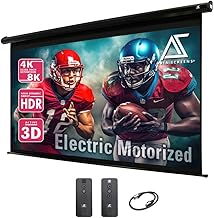
Acmejm 100″ Matte White Motorized Floor Rising Projector Screen
The Acmejm floor-rising model addresses challenging installation scenarios. This motorized screen rises directly from its casing on the floor, providing a premium, non-permanent solution. While a higher price point, the motorized floor-rising feature offers unparalleled flexibility for home theaters where wall mounting is impossible.

AWOL VISION 120″ Motorized ALR Floor Rising Projector Screen
Representing the pinnacle of automated convenience and performance, the AWOL VISION screen is specifically designed for Ultra Short Throw (UST) projectors and features Ambient Light Rejecting (ALR) material. This allows for stunning image quality even in bright rooms. The motorized floor-rising mechanism is exceptionally sleek, making this a truly premium automated projector screen investment.

VIVIDSTORM Motorized Floor Rising UST ALR Projector Screen
Similar to the AWOL, the VIVIDSTORM screen is built for the demanding performance of UST projectors in bright environments. This motorized floor-rising screen offers