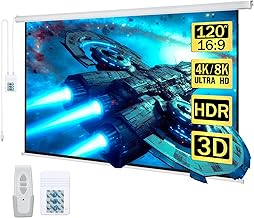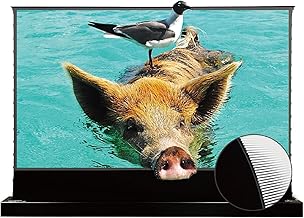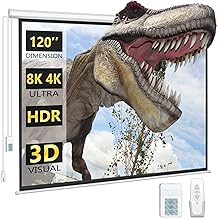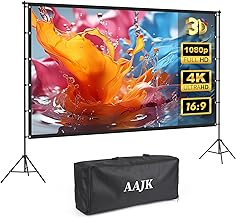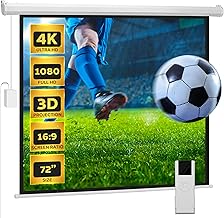
Motorized projector screens represent the pinnacle of home theater convenience, offering seamless deployment and retraction at the touch of a button. While the ‘wow factor’ of a massive screen silently descending from the ceiling is undeniable, the integration of electrical components and heavy mechanical parts introduces unique safety considerations. When investing in a projector screen motorized system, prioritizing safety features is just as crucial as evaluating image quality or screen gain.
This comprehensive review focuses specifically on the safety mechanisms built into modern motorized screens. We will examine critical features like automatic limit switches, anti-pinch technology, and material safety standards, ensuring your home cinema setup is both impressive and secure.
Why Motorized Screens Require Safety Features
A motorized screen is more than just fabric; it’s a complex piece of equipment involving a tubular motor, electronic controls, and a large, heavy casing. Because these screens often hang directly over seating areas or high-traffic zones, malfunctions can pose risks. The primary safety concerns revolve around mechanical failure and electrical integrity.
The Risks of Uncontrolled Descent
The most immediate mechanical danger is the screen descending unexpectedly or continuing to retract past its intended limits. An uncontrolled descent can damage the screen surface, the casing, the projector, or, most critically, injure someone standing or sitting below. This risk is amplified in larger screens (120 inches and above) where the weight of the screen material and roller assembly increases substantially.
Electrical Safety and Wiring
Motorized screens operate on AC power and require proper installation. Faulty wiring, substandard internal components, or lack of grounding can lead to electrical shorts, overheating, or even fire hazards. High-quality screens incorporate robust electrical insulation and certified motors to mitigate these dangers. Furthermore, for ceiling-recessed models, the housing must be designed to manage heat dissipation effectively.
Critical Safety Features in Motorized Projector Screens
Modern projector screen motorized units incorporate several essential safety features designed to protect the equipment, the structure, and the users.
Automatic Limit Switches (ALS)
Automatic Limit Switches (ALS) are non-negotiable safety features in any reliable motorized screen. These internal sensors detect when the screen has reached its programmed fully extended (down) or fully retracted (up) position. When the limit is reached, the switch instantly cuts power to the motor, preventing mechanical stress, motor burnout, or the screen fabric from being pulled too far and tearing off the roller. ALS systems ensure repeatable, precise stopping points every time.
Anti-Pinch/Auto-Stop Technology
This advanced feature, often found in higher-end models, provides immediate protection against obstruction. If the screen detects resistance during descent—for instance, if a child’s hand, a pet, or an object is in the path—the motorized screen will automatically stop or reverse its direction. This is a crucial safety mechanism, especially in family environments, preventing serious injury.
Fire Retardant Materials
The screen material itself should meet recognized fire safety standards, such as NFPA 701. Since the screen is a large surface area often placed near heat-producing projectors or electrical wiring, utilizing fire-retardant vinyl or fiberglass-reinforced materials significantly reduces the risk of fire spreading in the event of an electrical fault.
Remote Control Security and Child Lock
Many motorized screens come with wireless remote controls. While convenient, accidental activation can still cause issues. Some advanced remotes include child-lock features or require specific button sequences to activate, preventing young children from playing with the screen controls and causing accidental deployment or retraction.
Safety First: Motorized Projector Screen Safety Feature Review
We have selected 16 highly-rated motorized screens and assessed their design and stated safety features, focusing on reliability and user protection.
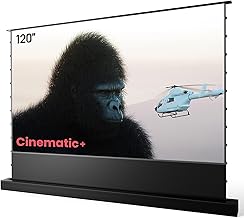
AWOL VISION 120″ Motorized ALR Floor Rising Projector Screen
This is a premium floor-rising model, which inherently reduces overhead risk. Its safety profile is high due to the robust casing and precision motorized lift system. Floor-rising screens typically include enhanced stability mechanisms and internal collision sensors to protect the screen surface as it rises and descends into the floor housing.
Aoxun 120 Inch Motorized Retractable Projector Screen
The Aoxun 120-inch screen emphasizes ease of use with remote control operation. For safety, this unit features a durable housing designed for both wall and ceiling mount applications, relying on factory-set limit switches to ensure the 4:3 screen stops accurately every time, preventing over-extension damage.
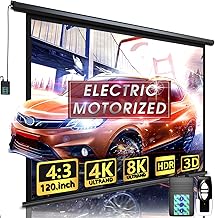
DINAH 120 Inch Electric Projector Screen with Remote
This DINAH screen is advertised with an “Automatic Air Indoor Drop Down” feature, suggesting a smooth, controlled descent mechanism that minimizes the risk of sudden drops. Its focus on 4K 3D HD projection is supported by a robust motor system that maintains even tension, which is a key safety feature preventing material warping and uneven retraction.
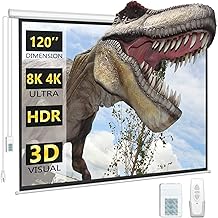
YODOLLA 150″ Projector Screen Motorized
Handling a 150-inch screen requires significant mechanical strength. The YODOLLA model emphasizes its heavy-duty motor designed for large format operation, including wall and ceiling mounting options. For safety, users must verify the mounting hardware provided is appropriate for the structural material (e.g., drywall studs or concrete) to prevent catastrophic failure due to weight.

VIVOHOME Motorized Projector Screen 100 Inch Auto Electric
VIVOHOME offers a 100-inch electric screen featuring auto-stop functionality via its remote control system. The ability to precisely control the screen’s stopping point is a critical safety feature, ensuring the black drop remains at the ideal height without over-extending the viewing surface, thereby prolonging the life of the motor and fabric.
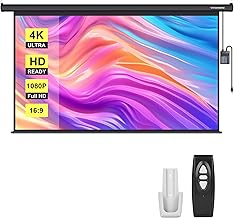
Kayle 120″ Motorized Projector Screen Electric
The Kayle 120-inch model is designed for versatile installation (wall/ceiling mount) and includes a wireless remote. The core safety feature here is the reliable motor mechanism that ensures smooth, non-jerky operation. Jerky movement during operation is often a precursor to mechanical failure, making smooth motion a key indicator of internal component integrity.

100 Inch Motorized Projector Screen – HD Electric
This standard 100-inch electric screen is built for indoor use and features both wall and ceiling mounting options. Its safety is derived from the remote-controlled system, which typically utilizes infrared (IR) or radio frequency (RF) signals to maintain control over the motor, offering reliable start/stop functionality crucial for preventing screen damage.
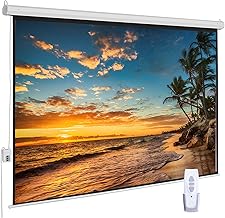
Akia Screens 125″ Motorized Projector Screen
Akia Screens products are known for quality construction. This 125-inch model, featuring 8K/4K HD capability, relies on robust internal mechanisms. The use of a quality motor and reliable limit switches is paramount at this size to handle the larger, heavier screen material and maintain perfect flatness over time, reducing the risk of screen material failure.
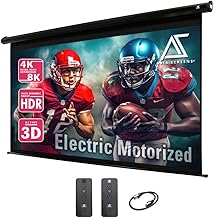
Kshioe Motorized Projector Screen with Remote Control
The Kshioe screen focuses on simplicity and anti-wrinkle performance. From a safety perspective, the inclusion of remote control operation means users do not need to physically handle the screen, reducing wear and tear on the housing and pull-down mechanism which can eventually lead to mechanical failure in manual screens.
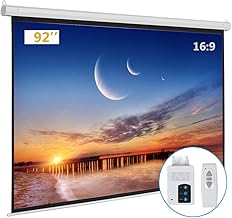
VIVIDSTORM Motorized Floor Rising UST ALR Projector Screen
The VIVIDSTORM screen is a high-end option featuring tensioned, wrinkle-free material and smart control options. Its premium safety features include advanced motor synchronization, anti-collision detection (crucial for floor-rising models), and app/voice control integration which offers greater control redundancy compared to simple remote-only units.
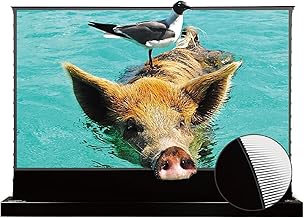
Pyle 72″ Portable Motorized Matte White Projector Screen
This Pyle model is noteworthy for its smaller size (72 inches), making the motor load lighter. However, it still features the essential motorized components with wall/ceiling mount capability. The primary safety check here is verifying the quality of the matte white surface, which should be fire-retardant, especially given the screen’s proximity to electrical components.
120″ Motorized Projector Screen, Electric 4:3
Offering a 4:3 aspect ratio, this motorized screen is often used for presentations or older video formats. The safety consideration for 4:3 screens often relates to the housing dimensions; ensure the casing is robust enough to handle the wider roll of fabric, and that the motor is rated for continuous, heavy-duty use if the screen will be raised and lowered frequently in an office or classroom setting.
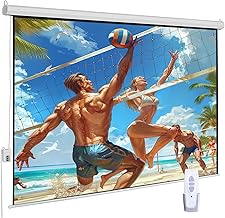
Elite Screens Spectrum2, 100-inch Electric Motorized
Elite Screens is a respected brand, and the Spectrum2 line often includes advanced safety features. This model typically utilizes a synchronous motor with a reliable internal mechanism and a three-way wall switch (Up/Stop/Down), providing redundant control beyond the remote, which is a key safety benefit.
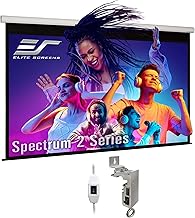
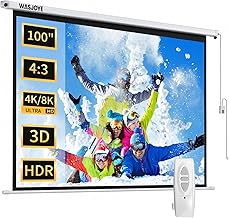
WASJOYE 100 Inch Motorized Projector Screen (4:3)
Similar to other motorized screens, this WASJOYE model features electric drop-down functionality. Its safety is enhanced by offering a dual power supply option (likely wired and remote/wireless), ensuring that the screen can always be safely retracted even if one control method fails. This redundancy is highly valued in permanent installations.
Motorized Projector Screen Pull Down 100 Inch
This automatic screen is explicitly labeled as a “Pull Down” model, indicating a ceiling or wall installation. The use of a smooth, automated retraction process prevents the common damage associated with manual pull-down screens (where users often release the handle too quickly), which can lead to rapid, uncontrolled retraction and screen material damage.
Elite Screens 110-Inch Motorized Tensioned Projector Screen
The tensioned system in this Elite Screen is a safety feature in itself. Tension wires prevent edge curling and keep the screen perfectly flat, reducing the chance of the material binding or jamming within the housing during retraction. Furthermore, the CineGrey material is typically fire-rated and ISF certified, confirming high safety and performance standards.

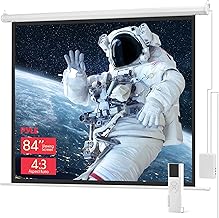
Pyle 84″ Motorized Projector Screen (4:3)
Similar to the 72-inch model, the 84-inch Pyle screen offers automated convenience. For this size, the focus is on the durability of the mounting system and the quality of the motor, ensuring the screen remains securely fixed to the wall or ceiling and operates smoothly via the included wireless remote.
VEVOR Motorized Projector Screen, 120 inch
The VEVOR 120-inch model is a large-format electric screen designed for easy wall mounting. Safety features include the remote control system for hands-free operation and the promise of 4K HD support, implying a smooth, high-quality surface that is less prone to mechanical issues during its programmed cycle of movement.

Installation Safety: DIY vs. Professional Mounting
Regardless of how many advanced safety features a projector screen motorized unit boasts, improper installation negates them all. Because these units are heavy and often mounted high on walls or ceilings, installation safety is paramount.
The Risks of DIY Installation
Attempting to install a large motorized screen (especially those over 100 inches) without proper tools or knowledge carries significant risks:
- Structural Failure: Mounting directly into drywall without hitting studs or solid blocking can lead to the entire unit tearing away from the wall or ceiling, resulting in severe damage or injury.
- Electrical Hazards: Wiring a motorized screen requires connecting to AC power. Improper wiring can lead to short circuits, motor damage, or electrical shock.
- Misaligned Limits: Incorrectly setting the upper and lower limit switches during setup can cause the screen to jam or detach from the roller tube over time.
When to Call a Professional
For ceiling-recessed screens or large, heavy models, professional installation is highly recommended. Professionals ensure the mounting hardware is securely fastened to structural elements, handle all electrical wiring safely according to local codes, and calibrate the limit switches perfectly to prevent mechanical strain. While professional installation adds cost, it is an investment in long-term safety and reliability for your motorized screen.
Advanced Motor Technology and Safety
The motor is the heart of any projector screen motorized system, and motor quality directly correlates with safety and longevity.
Tubular Motor Design
Most high-quality motorized screens use tubular motors that fit neatly inside the roller tube. These motors are self-contained and feature internal thermal protection. If the motor runs continuously for too long (due to a malfunction or continuous user operation), the thermal protection will temporarily shut down the motor to prevent overheating and fire risk.
Low-Voltage Control Systems
Many modern screens separate the high-voltage power supply from the user controls by utilizing low-voltage triggers (like 5V or 12V triggers). These triggers allow the screen to deploy or retract automatically when the projector is turned on or off. This separation enhances safety by minimizing user interaction with high-voltage circuits and ensuring the screen operates predictably based on the projector status.
Maintenance Tips for Longevity and Safety
Regular maintenance ensures that the safety features of your motorized projector screen remain functional throughout its lifespan.
Routine Inspections
Periodically check the mounting hardware. Look for any signs of loosening screws, stress cracks in the casing, or movement of the housing away from the wall or ceiling. For tensioned screens, inspect the tension cables for fraying or damage.
Testing Limit Switches
Once or twice a year, test the limit switches. Run the screen fully up and fully down, ensuring the motor stops instantly and cleanly at the preset limits without any grinding or struggling sounds. If the screen overshoots or struggles to stop, the limit switches may need recalibration or replacement.
Cleaning the Screen Material
Clean the screen according to the manufacturer’s instructions. Accumulated dust or dirt can add unnecessary weight, stressing the motor and potentially causing the screen material to stick or roll unevenly, which can lead to tears or jams. Always use gentle, non-abrasive methods.
The Value of a Safe Motorized Investment
While basic manual screens are often the cheapest option, the convenience and enhanced safety features of a