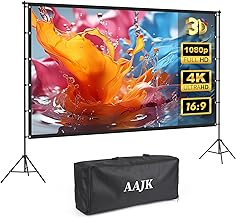
Fast-Folding Frame Screens
For a sturdier, yet still portable option, models like the Elite Screens Yard Master 2 use a robust aluminum frame that quickly snaps together, maintaining excellent screen tension without permanent mounting hardware.

Critical Screen Technology for Bright Rooms
The single biggest hurdle when using a projector screen for TV replacement is ambient light. Unlike a TV, which generates its own light, a projector screen relies on reflecting light. If the room is bright, the image washes out. This is where specialized screen materials come into play.
Ambient Light Rejecting (ALR) vs. Ceiling Light Rejecting (CLR)
To combat ambient light, you need an ALR screen. These screens use microscopic optical structures that selectively reflect light coming from the projector (usually straight on) while absorbing light coming from other angles (like windows or overhead lighting).
- ALR (Ambient Light Rejecting): General term for screens that reject light coming from all directions other than the projector’s path.
- CLR (Ceiling Light Rejecting): A specialized type of ALR screen designed specifically for Ultra Short Throw (UST) projectors. These screens are highly directional and reject light coming from above (e.g., ceiling lights), making them essential for UST projectors used in brightly lit living rooms.
If you are planning to use a UST projector (which sits right below the screen), investing in a CLR screen, such as the material used in the AWOL VISION or VIVIDSTORM motorized floor-rising models, is non-negotiable for daytime viewing quality that truly rivals a high-end TV.
Gain and Viewing Angle Explained
Screen gain refers to the screen’s ability to amplify the brightness of the projected image. A gain of 1.0 means the screen reflects light equally across all angles. Screens with higher gain (e.g., 1.5 or 2.0) focus light back toward the center viewing axis, making the image brighter but narrowing the optimal viewing angle.
- High Gain (1.3+): Better for very dim projectors or situations where brightness is critical, but the picture quality drops off significantly if you sit far off-center.
- Low Gain (1.0-1.1): Provides a wider viewing angle, ensuring everyone sees a uniform picture, ideal for large family rooms.
When selecting a projector screen for TV use, a gain around 1.1 to 1.5 is often a good compromise, especially when paired with a quality ALR coating, like the 1.5 gain offered by this 100″ Indoor/Outdoor Portable Screen.
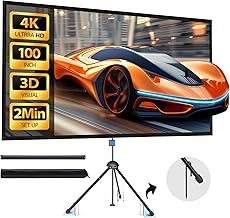
Top Projector Screens for a TV-Like Experience
We’ve reviewed several categories of screens that excel in mimicking the TV experience, prioritizing flatness, light rejection, and ease of use.
Premium Motorized ALR Options
For the ultimate blend of performance and discretion, motorized ALR screens are unmatched. They provide the large format of projection with the convenience and visual quality necessary for daily TV viewing.
AWOL VISION 120″ Motorized ALR Floor Rising Screen
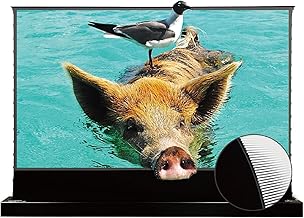
This screen is specifically engineered for Ultra Short Throw projectors. Its motorized, floor-rising design means it stays hidden when not in use, and the ALR material ensures superb contrast even in daylight. This is the closest you can get to a massive TV that disappears when you turn it off.

VIVIDSTORM Motorized Floor Rising UST ALR Screen
Another high-end contender in the floor-rising category, VIVIDSTORM offers robust tensioning systems to maintain a perfectly flat surface, crucial for UST projection. This model provides an effortless, luxurious way to deploy a cinema-sized display.
Best Fixed Frame Screens
Fixed frames offer the best value for permanent installations, providing superior image quality due to their consistently flat surface.
Elite Screens Aeon CineGrey 3D (100″)
The CineGrey 3D material is an ALR surface specifically designed to enhance black levels and contrast in rooms with moderate ambient light. Its fixed frame design gives it the clean, borderless look of a high-end TV, making it a stellar choice for a living room projector screen for TV use.

Elite Screens Sable Frame (120”)
Offering a larger canvas, the Sable Frame uses a high-quality matte white material that is perfect for light-controlled environments or bright projectors. The velvet black trim around the frame absorbs projector overshoot, further enhancing the perceived contrast and providing a professional, finished look that resembles a large television display.

Silver Ticket Products STR Series (120″)
Known for delivering high quality at a competitive price, the Silver Ticket fixed frame screen is a great entry point into dedicated home cinema. The 1.1 gain matte white material is excellent for standard throw projectors and provides a wide viewing angle, perfect for family movie nights.

Value-Driven Pull-Down and Portable Choices
If budget or portability is the main concern, several options provide a large image without the high cost of motorized or specialized ALR materials.
VIVOHOME Motorized Projector Screen (100″)
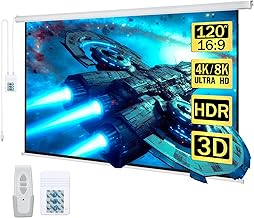
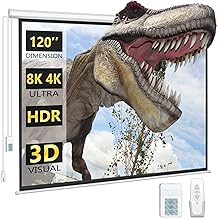
For those desiring the convenience of a motorized screen without the premium price tag of ALR, the VIVOHOME 100-inch electric screen is a solid choice. It features remote operation and a standard matte white surface, best suited for rooms where light can be controlled.

Elite Screens Manual B Pull Down (100″)
Manual pull-down screens are the most cost-effective way to get a large, retractable display. The Elite Screens Manual B features an auto-locking mechanism, allowing you to stop the screen at any desired height. This is perfect for occasional TV viewing or presentations in a dedicated space.

Elite Screens Manual Pull Down (110″)
A slightly larger version of the Manual B, this 110-inch screen provides even more viewing real estate for a truly cinematic feel. The manual pull-down mechanism remains reliable and budget-friendly.

Pyle 72-Inch Manual Pull Down Screen
For smaller rooms or offices where a large TV replacement is desired but space is limited, this 72-inch Pyle manual screen offers a compact, wall-mounted solution. Its auto-lock feature ensures it stays firmly in place when deployed.
The modern living room is undergoing a transformation. While flat-panel TVs continue to grow in size, they still cannot compete with the sheer cinematic scale offered by a dedicated projector setup. For consumers looking to truly replace or significantly augment their traditional television with a massive display, selecting the right projector screen for TV use is paramount. This isn’t just about hanging a white sheet; it requires specialized technology—specifically Ambient Light Rejecting (ALR) materials and robust installation methods—to handle the bright, everyday viewing conditions typically associated with TV consumption.
Switching from a TV to a projection system offers unparalleled immersion, but it introduces unique challenges, mainly dealing with ambient light and ensuring the display looks crisp and vibrant, even during the day. This guide delves into the best screen types, critical safety features, and top products available to help you achieve a true home cinema experience that rivals, or surpasses, your old TV.
Safety First: Projector Screen Installation Safety Feature Review
When installing a large display, especially motorized or fixed screens designed to mimic a television, safety is a critical consideration. Projector screens, particularly those over 100 inches, can be heavy and often require mounting mechanisms that interact directly with your home’s structure. Ensuring proper installation and material integrity prevents accidents and protects your investment.
Wall Mount Stability and Load Bearing
Fixed frame screens, which are designed to look most like a traditional TV, require secure wall mounting. It is essential that the wall anchors used are rated to handle the weight of the screen, plus a significant safety margin. For screens designed to replace a large TV, like the Silver Ticket Products Fixed Frame models, the frame itself must be rigid enough to maintain tension without warping, ensuring a flat, distortion-free surface.
For large, permanent installations, always mount directly into wall studs or use heavy-duty toggle bolts specifically rated for drywall mounting of heavy objects. Never rely solely on adhesive hooks for large, permanent projector screen for TV setups.
Consider the Silver Ticket Products STR Series 6 Piece White 1.1 Gain 120″ Diagonal 16:9 Format Projection Screen. This fixed frame design demands careful assembly and mounting to ensure the tensioned material remains perfectly flat, mimicking the rigidity of a high-end flat-panel display.
Motorized Screen Mechanisms (Safety Stops)
Motorized screens, whether ceiling-recessed or floor-rising, present mechanical safety concerns. High-quality motorized units, such as those from VIVIDSTORM or Elite Screens, incorporate several safety features:
- Automatic Stop Limits: These prevent the screen from over-extending, which could damage the motor or the screen material itself.
- Manual Override: Allows the user to stop the screen deployment instantly if an obstruction is detected.
- Quiet Operation: While not strictly a safety feature, smoother, quieter motors generally indicate higher build quality and less risk of mechanical failure.
The premium VIVIDSTORM Motorized Floor Rising UST ALR Projector Screen is an excellent example of advanced motorized safety. Its floor-rising mechanism is built into a heavy, stable casing, preventing tipping and ensuring smooth, controlled movement, which is essential when the screen is used frequently like a television.
Choosing Your TV Replacement Screen
When transitioning from a TV to a projector system, the screen choice dictates the quality of your daily viewing experience. The three main types—fixed frame, motorized, and portable—each serve a distinct purpose in achieving the desired “TV look.”
Fixed Frame Screens: The True TV Aesthetic
A fixed frame screen is permanently tensioned and mounted to the wall, closely resembling a giant flat-panel television. These screens offer the best possible flatness and visual uniformity, which is crucial for high-resolution 4K and 8K content. They are ideal for dedicated home theaters or living rooms where the screen will be the central, permanent focal point.
For those seeking the highest quality image stability, a fixed frame screen utilizing ALR (Ambient Light Rejecting) technology, such as the Elite Screens Aeon CineGrey 3D, is the top choice. The fixed frame ensures zero wrinkles, a common issue with cheaper pull-down models.
Motorized Screens: Discretion and Convenience
Motorized screens are perfect for multi-purpose rooms where you don’t want the screen visible 24/7. They can be mounted on the ceiling or wall and retract into a sleek casing when not in use. For a clean, TV-like look that disappears when entertaining, motorized screens are invaluable.
Motorized screens come in two main varieties:
Ceiling/Wall Drop-Down Screens
These screens deploy vertically from the ceiling or wall. They are the traditional choice for home theaters. The key feature here is the tensioning system—look for tab-tensioned models to prevent the edges from curling over time. The VIVOHOME Motorized Projector Screen with Remote offers great convenience for everyday use, allowing you to deploy your massive display with the push of a button.
Floor-Rising Screens (UST Optimized)
These are particularly popular for use with Ultra Short Throw (UST) projectors, which are often placed directly in front of the screen, mimicking where a TV stand would sit. The screen rises from a floor console, making installation exceptionally clean. The AWOL VISION 120″ Motorized ALR Floor Rising Projector Screen is designed specifically for this setup, providing a massive, high-contrast image that truly replaces a large TV.
Portable Screens: Flexibility for Any Room
While not a permanent TV replacement, portable screens offer the flexibility to move your viewing experience from the living room to the backyard or basement. These screens typically come with tripod stands or lightweight folding frames.
Tripod and Stand Models
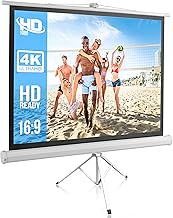
For occasional use or presentations, tripod models like the Elite Screens Tripod, 100-Inch Portable Projector Screen are easy to set up and tear down. They offer a great temporary solution for large-scale viewing. Similarly, the smaller Pyle 50 Inch Portable Projector Screen with Tripod Stand is perfect for smaller spaces or quick setups.

Fast-Folding Frame Screens
For a sturdier, yet still portable option, models like the Elite Screens Yard Master 2 use a robust aluminum frame that quickly snaps together, maintaining excellent screen tension without permanent mounting hardware.
Critical Screen Technology for Bright Rooms
The single biggest hurdle when using a projector screen for TV replacement is ambient light. Unlike a TV, which generates its own light, a projector screen relies on reflecting light. If the room is bright, the image washes out. This is where specialized screen materials come into play.
Ambient Light Rejecting (ALR) vs. Ceiling Light Rejecting (CLR)
To combat ambient light, you need an ALR screen. These screens use microscopic optical structures that selectively reflect light coming from the projector (usually straight on) while absorbing light coming from other angles (like windows or overhead lighting).
- ALR (Ambient Light Rejecting): General term for screens that reject light coming from all directions other than the projector’s path.
- CLR (Ceiling Light Rejecting): A specialized type of ALR screen designed specifically for Ultra Short Throw (UST) projectors. These screens are highly directional and reject light coming from above (e.g., ceiling lights), making them essential for UST projectors used in brightly lit living rooms.
If you are planning to use a UST projector (which sits right below the screen), investing in a CLR screen, such as the material used in the AWOL VISION or VIVIDSTORM motorized floor-rising models, is non-negotiable for daytime viewing quality that truly rivals a high-end TV.
Gain and Viewing Angle Explained
Screen gain refers to the screen’s ability to amplify the brightness of the projected image. A gain of 1.0 means the screen reflects light equally across all angles. Screens with higher gain (e.g., 1.5 or 2.0) focus light back toward the center viewing axis, making the image brighter but narrowing the optimal viewing angle.
- High Gain (1.3+): Better for very dim projectors or situations where brightness is critical, but the picture quality drops off significantly if you sit far off-center.
- Low Gain (1.0-1.1): Provides a wider viewing angle, ensuring everyone sees a uniform picture, ideal for large family rooms.
When selecting a projector screen for TV use, a gain around 1.1 to 1.5 is often a good compromise, especially when paired with a quality ALR coating, like the 1.5 gain offered by this 100″ Indoor/Outdoor Portable Screen.
Top Projector Screens for a TV-Like Experience
We’ve reviewed several categories of screens that excel in mimicking the TV experience, prioritizing flatness, light rejection, and ease of use.
Premium Motorized ALR Options
For the ultimate blend of performance and discretion, motorized ALR screens are unmatched. They provide the large format of projection with the convenience and visual quality necessary for daily TV viewing.
AWOL VISION 120″ Motorized ALR Floor Rising Screen
This screen is specifically engineered for Ultra Short Throw projectors. Its motorized, floor-rising design means it stays hidden when not in use, and the ALR material ensures superb contrast even in daylight. This is the closest you can get to a massive TV that disappears when you turn it off.
VIVIDSTORM Motorized Floor Rising UST ALR Screen
Another high-end contender in the floor-rising category, VIVIDSTORM offers robust tensioning systems to maintain a perfectly flat surface, crucial for UST projection. This model provides an effortless, luxurious way to deploy a cinema-sized display.
Best Fixed Frame Screens
Fixed frames offer the best value for permanent installations, providing superior image quality due to their consistently flat surface.
Elite Screens Aeon CineGrey 3D (100″)
The CineGrey 3D material is an ALR surface specifically designed to enhance black levels and contrast in rooms with moderate ambient light. Its fixed frame design gives it the clean, borderless look of a high-end TV, making it a stellar choice for a living room projector screen for TV use.
Elite Screens Sable Frame (120”)
Offering a larger canvas, the Sable Frame uses a high-quality matte white material that is perfect for light-controlled environments or bright projectors. The velvet black trim around the frame absorbs projector overshoot, further enhancing the perceived contrast and providing a professional, finished look that resembles a large television display.
Silver Ticket Products STR Series (120″)
Known for delivering high quality at a competitive price, the Silver Ticket fixed frame screen is a great entry point into dedicated home cinema. The 1.1 gain matte white material is excellent for standard throw projectors and provides a wide viewing angle, perfect for family movie nights.
Value-Driven Pull-Down and Portable Choices
If budget or portability is the main concern, several options provide a large image without the high cost of motorized or specialized ALR materials.
VIVOHOME Motorized Projector Screen (100″)
For those desiring the convenience of a motorized screen without the premium price tag of ALR, the VIVOHOME 100-inch electric screen is a solid choice. It features remote operation and a standard matte white surface, best suited for rooms where light can be controlled.
Elite Screens Manual B Pull Down (100″)
Manual pull-down screens are the most cost-effective way to get a large, retractable display. The Elite Screens Manual B features an auto-locking mechanism, allowing you to stop the screen at any desired height. This is perfect for occasional TV viewing or presentations in a dedicated space.
Elite Screens Manual Pull Down (110″)
A slightly larger version of the Manual B, this 110-inch screen provides even more viewing real estate for a truly cinematic feel. The manual pull-down mechanism remains reliable and budget-friendly.
Pyle 72-Inch Manual Pull Down Screen
For smaller rooms or offices where a large TV replacement is desired but space is limited, this 72-inch Pyle manual screen offers a compact, wall-mounted solution. Its auto-lock feature ensures it stays firmly in place when deployed.