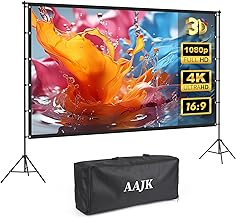
When setting up a home theater, conference room, or outdoor cinema, the projector often steals the spotlight. However, the true quality of the image—its brightness, contrast, and color fidelity—is determined almost entirely by the surface it hits. Choosing the correct projector screen cloth material is arguably the most critical decision in optimizing your viewing experience.
The material acts as a canvas, reflecting the light from the projector back to the audience. Different materials are engineered to handle varying levels of ambient light, viewing angles, and projector throw distances. Understanding the technical specifications of these fabrics is essential, whether you are building a dedicated dark room or planning a bright, multi-purpose living space setup.
Why Projector Screen Cloth Material Matters: Gain and Viewing Angle
The performance characteristics of any projection surface are defined by two key metrics: screen gain and viewing angle. These factors dictate how bright the image appears and how consistently that brightness is maintained across the screen area.
Understanding Screen Gain
Screen gain is a measurement of the reflectivity of the projector screen cloth material compared to a standard reference surface (a sheet of magnesium carbonate, which has a gain of 1.0). If a screen has a gain of 1.0, it reflects the same amount of light in all directions as the reference material.
- High Gain (1.1 to 2.5+): These materials reflect light more intensely back toward the center of the audience, making the image appear brighter. They are excellent for environments where the projector has low lumen output or where a very bright image is desired. However, they suffer from a phenomenon called “hotspotting,” where the center is noticeably brighter than the edges, and the viewing angle is narrower.
- Unity Gain (1.0): Materials like matte white vinyl or PVC typically offer a 1.0 gain. They distribute light evenly across the entire surface. This results in excellent color accuracy and a wide, consistent viewing angle, making them ideal for dedicated home theaters where light control is optimal.
- Low Gain (0.5 to 0.9): Often used in high-contrast gray or Ambient Light Rejecting (ALR) screens, these materials intentionally absorb some light. While the overall brightness is slightly reduced, the material significantly boosts black levels and contrast, crucial in rooms with moderate ambient light.
The Critical Role of Viewing Angle
The viewing angle describes the maximum angle at which the audience can sit relative to the center axis of the screen before the image brightness drops by 50%. This is directly related to the screen’s gain.
High-gain materials concentrate light, leading to a narrower viewing cone. If viewers sit too far off-center, the image will appear dim. Conversely, unity gain and low-gain materials spread the light more broadly, offering a wider viewing angle, which is perfect for large rooms or audience seating arrangements that span a wide arc.
The Primary Types of Projector Screen Cloth Material
Projection screens are manufactured using several different base materials, each offering unique performance characteristics and price points. The most common materials include PVC, vinyl, and specialized fabrics, often backed by fiberglass for stability.
Matte White (PVC/Vinyl)
Matte white surfaces are the most common and versatile projector screen cloth material. They are typically made from a blend of PVC (polyvinyl chloride) and vinyl. These materials are favored for their neutral color reproduction and near-perfect light diffusion (usually 1.0 gain).
Advantages:
- Excellent color fidelity and uniformity.
- Wide viewing angles.
- Affordable and widely available.
- Often available in wrinkle-resistant, foldable formats for portability.
Considerations: Matte white performs best in dark or highly controlled lighting environments, as they reflect ambient light just as readily as projected light, washing out the image.
Fiberglass-Backed Materials
For large, permanent, or motorized installations, the screen material needs structural integrity to prevent sagging, waving, or creasing. Many high-quality PVC or vinyl screens incorporate a woven fiberglass backing layer. This layer provides dimensional stability, ensuring the screen remains perfectly flat and taut, which is critical for maintaining image geometry, especially with 4K and 8K projectors.
Woven Fabric and Acoustic Transparency
In high-end home theaters, enthusiasts often want to hide speakers directly behind the screen material to achieve a true cinema experience. This requires an acoustically transparent projector screen cloth material. These materials are typically made from finely woven fabrics or perforated vinyl. The tiny holes allow sound waves to pass through the screen without audible distortion, while the weave remains tight enough to reflect the projected light efficiently.
Key Trade-off: Acoustically transparent screens often have a slightly lower gain (around 0.8 to 0.9) and may require a more powerful projector to compensate for the light lost through the perforations.
Gray and High-Contrast Materials
Gray screen materials are designed to enhance contrast, especially the black levels. By having a darker base color, the screen absorbs more ambient light that hits the surface, while still reflecting the brighter projected light. This is particularly effective in rooms with light-colored walls or moderate ambient light sources.
A gray screen with a gain of 0.8, for example, will produce deeper blacks than a 1.0 gain white screen, provided the projector is bright enough. This material is a great compromise for multi-use living rooms where total darkness is not always possible.
Advanced Materials: Ambient Light Rejecting (ALR) Screens
The most significant innovation in projector screen cloth material technology is the development of Ambient Light Rejecting (ALR) screens. These screens are essential for using projectors in bright environments, such as living rooms with large windows or office spaces.
How ALR Technology Works
ALR screens do not simply absorb light; they selectively reflect light coming from the projector while rejecting light coming from other angles (i.e., ambient light from the ceiling or sides).
This is achieved through complex, micro-layered structures:
- Angular Reflectivity: ALR materials feature microscopic prisms or sawtooth structures that are oriented to reflect light coming from the specific angle of the projector back towards the viewer. Light coming from steep angles (like overhead room lights) is absorbed or deflected away.
- Ceiling Light Rejecting (CLR): A specialized subset of ALR screens, CLR materials are specifically engineered to block light coming from above, making them perfect for standard or long-throw projectors mounted on the ceiling.
- Ultra-Short Throw (UST) Specific Materials: UST projectors sit directly below the screen, projecting light upwards at an extreme angle. UST ALR materials have inverted micro-structures designed to catch this upward light while rejecting ambient light from above and the sides. Using a standard ALR screen with a UST projector, or vice versa, will result in a severely degraded image.
Choosing the Right Material for Your Environment
Selecting the ideal projector screen cloth material depends heavily on where and how you plan to use it.
Indoor Home Theater Considerations
For a dedicated, light-controlled home theater (dark walls, no windows, or effective blackout curtains), the choice is simple: a Matte White (1.0 gain) screen. This material ensures the most accurate color reproduction and widest viewing angle, maximizing the quality of the projector’s output.
If the room is a multi-purpose living space with some unavoidable ambient light, a High-Contrast Gray or a Fixed-Frame ALR screen is necessary to maintain image quality and contrast.
Portable and Outdoor Material Durability
When selecting a screen for outdoor movie nights or mobile presentations, durability and portability are key. These materials are usually flexible PVC or polyester fabric. You must look for materials that are:
- Anti-Crease/Wrinkle-Free: Essential for screens that are folded and stored regularly.
- Washable: Outdoor screens are exposed to dust, pollen, and moisture.
- Double-Sided Projection: Some outdoor setups require rear projection (projector behind the screen), necessitating a material that works effectively from both sides.
For outdoor use, look for robust materials often listed as “Oxford Fabric” or “Thickened Polyester” that can withstand tension and environmental exposure.
The Projector Screen Cloth Material Buyer’s Guide & Checklist
Before making a purchase, use this checklist to ensure the material matches your specific setup requirements.
Key Factors to Consider
1. Projector Type and Throw Distance
Standard/Long Throw: Most versatile. Works well with matte white, gray, or CLR screens.
Ultra-Short Throw (UST): Requires a specialized UST ALR screen material. Using a standard screen will severely degrade the image due to the steep projection angle.
2. Ambient Light Levels
- Dark Room (Dedicated Theater): Matte White (1.0 gain).
- Moderate Ambient Light (Living Room): High-Contrast Gray (0.8-0.9 gain) or ALR.
- Bright Room (Daytime Viewing): High-performance ALR/CLR screen.
3. Screen Format and Size
Ensure the aspect ratio (16:9 for movies, 4:3 for presentations, 2.35:1 for cinematic scope) matches your primary content. Measure your space carefully to determine the largest possible diagonal size without overwhelming the viewing area.
4. Resolution Support
While most modern materials are rated for 4K and 8K, check the manufacturer’s specifications. High-resolution screens must have an extremely fine, smooth surface structure to prevent visible texture (sometimes called “sparkle” or “hotspotting”) that can interfere with pixel clarity.
5. Installation Type (Fixed, Motorized, Portable)
- Fixed Frame: Best flatness, typically uses fiberglass-backed or tensioned materials. Ideal for permanent installations.
- Motorized/Pull-Down: Requires wrinkle-resistant material with tensioning systems to maintain flatness when deployed.
- Portable/Folding: Requires highly durable, foldable, and lightweight fabric (like polyester or flexible PVC).
Maintenance and Cleaning Tips
Proper care extends the life and performance of your projector screen cloth material.
- Dusting: Use a microfiber cloth or soft brush regularly. Never use harsh paper towels, which can scratch the coating.
- Cleaning Stains: Use mild soap and distilled water. Apply gently with a damp, non-abrasive cloth. Avoid excessive rubbing, especially on ALR surfaces, as this can damage the micro-structures.
- Storage (for portable screens): Always store the screen dry and folded loosely, or rolled, according to manufacturer instructions to prevent mildew and permanent creasing.
Recommended Projector Screen Materials: Product Showcase
We have selected a range of top-rated projector screen materials and complete screens that demonstrate the variety and quality available on the market, catering to different environments and budgets.
1. High-Contrast Portable Material
This foldable screen material is a popular choice for backyard cinema due to its portability and anti-crease properties. The inclusion of a black backing helps block light bleed-through, enhancing perceived contrast, which is crucial in less-than-perfect lighting conditions.

Product Focus: Projector Screen 84 inch, DUYIKJ Portable Black Backing Blackout
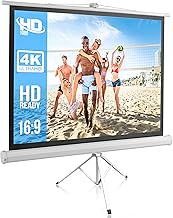
2. Standard Matte White Portable Screen
A classic choice for flexibility, this large foldable screen uses standard matte white fabric, ideal for indoor or outdoor use where ambient light is minimal. It supports double-sided projection, offering versatility for rear-projection setups.

Product Focus: 120 inch Projector Screen 16:9 Foldable Anti-Crease Portable
3. High-End Motorized ALR (UST)
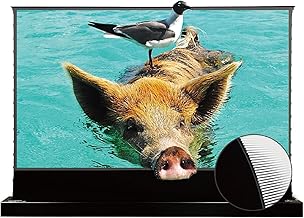
For the ultimate living room setup with an Ultra-Short Throw projector, the specialized ALR material in this motorized floor-rising screen is essential. It rejects ceiling light, delivering vibrant images even in bright rooms, making it a high-investment piece of technology.

Product Focus: AWOL VISION 120″ Motorized ALR Floor Rising Projector Screen
4. Fixed Frame White Material (1.1 Gain)
Fixed frame screens offer the best flatness and tension. This model features a white 1.1 gain material, providing a slight boost in brightness over unity gain while maintaining excellent color accuracy for dedicated dark room home theaters.

Product Focus: Silver Ticket Products STR Series 6 Piece White 1.1 Gain 120″ Diagonal
5. Manual Pull Down Matte White
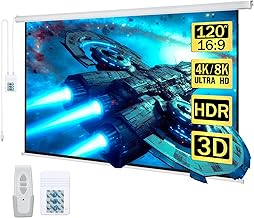
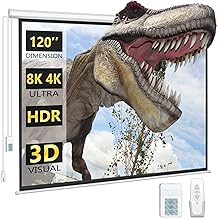
A highly practical and cost-effective solution for classrooms or offices. This manual pull-down screen uses a durable matte white surface with an auto-lock mechanism, ensuring the projector screen cloth material remains taut when in use.

Product Focus: Pyle 72-Inch Manual Pull Down Projector Screen
6. Washable 150-inch Fabric
For large-scale, temporary events, a massive washable screen is indispensable. This model uses a durable, anti-crease fabric that can be cleaned easily, supporting both indoor and outdoor large-format projection.
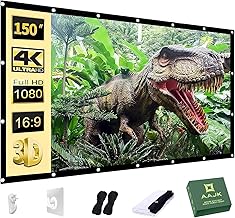
Product Focus: AAJK Projector Screen 150 inch, Washable Projector Screen
7. DIY High-Contrast Gray Material
For custom installations or DIY fixed frames, purchasing the raw material allows for maximum flexibility. This high-contrast gray material is excellent for improving black levels in rooms where some light control is compromised.

Product Focus: Elite Screens Designer Cut, 135-inch Blackout DIY High Contrast Grey Projector Screen Material
8. Tripod Screen with MaxWhite 2 Material
A highly portable option featuring Elite Screens’ proprietary MaxWhite 2 material (1.1 gain). The tripod format is easy to set up for temporary presentations or small movie nights, offering a bright, crisp image on a durable surface.

Product Focus: Elite Screens Tripod, 100-Inch Portable Projector Screen with Stand– MaxWhite 2
9. Fixed Frame CineGrey 3D (ALR)
An advanced fixed frame screen designed with CineGrey 3D material. This is a dedicated ALR screen that rejects ambient light from the ceiling and sides, making it suitable for standard throw projectors in bright living spaces. The fixed frame ensures perfect flatness.

Product Focus: Elite Screens Aeon CineGrey 3D, 100″ Fixed Frame CLR/ALR Projector Screen
10. Dual Projection Outdoor Screen
This screen is specifically designed for outdoor events where the audience might be viewing from both the front and the rear. The WraithVeil Dual material allows for high-quality projection through the fabric, maximizing flexibility in event setup.

Product Focus: Elite Screens Yard Master 2 DUAL Projector Screen
11. Budget Dual-Sided Projection Fabric
An economical option for casual use, this simple fabric screen supports both front and rear projection. While it lacks the advanced features of ALR or tensioned screens, its portability and low cost make it perfect for occasional movie nights or parties.

Product Focus: Projector Screen,HUANYINGBJB 4K 16:9 HD Rear Front Projector Screen Foldable
12. Manual Pull Down for General Use
This is a solid, mid-range manual pull-down screen. The matte white projector screen cloth material is reinforced for durability and flatness, suitable for permanent wall or ceiling mounting in offices or basic home setups where a retractable feature is desired.
Product Focus: Elite Screens Manual B, 100-INCH Manual Pull Down Projector Screen
13. Ultra-Short Throw Specific Motorized Screen
Designed explicitly for UST projectors, this motorized screen utilizes specialized material structures to maximize the image quality from a projector placed directly below. This is essential for maximizing contrast and brightness in high-end UST installations.
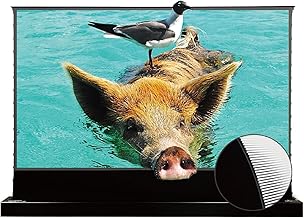
Product Focus: VIVIDSTORM Motorized Floor Rising UST ALR Projector Screen
Advanced Considerations for Projector Screen Cloth Material
Beyond the basics of gain and ambient light rejection, several advanced factors differentiate high-quality screen materials from standard fabrics, particularly when dealing with modern 4K and 8K content.
Color Uniformity and Accuracy
A high-quality projector screen cloth material must