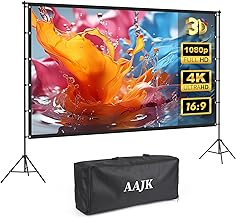
Stepping into the world of large-format projection means leaving behind the limitations of traditional televisions and embracing true cinematic immersion. When we talk about a massive projector screen, we are generally referring to diagonals exceeding 100 inches, commonly ranging from 120 inches all the way up to spectacular 300 inches. This size category demands careful consideration, as the sheer scale introduces new challenges related to installation, material quality, and environmental factors like ambient light.
Choosing the right screen is arguably more important than selecting the projector itself. A poor screen choice can negate the benefits of a high-resolution 4K or 8K projector, leading to a dull, washed-out, or distorted image. For those seeking the biggest display possible, the decision often boils down to a fundamental comparison: the permanence and performance of a fixed frame screen versus the flexibility and convenience of a portable or inflatable massive screen.
Defining the Massive Projector Screen Landscape (120″ to 300″)
The term “massive” is subjective, but in projection, it typically starts where large TVs stop being practical—around 120 inches. These enormous sizes are popular for dedicated home theaters, large conference rooms, public venues, and especially for outdoor movie nights where space is abundant.
Why Go Massive? Immersion and Viewing Distance
The primary reason for investing in a massive projector screen is the unparalleled level of immersion. Watching content on a screen that fills your peripheral vision transforms the experience from viewing a movie to truly being a part of it. This scale is essential for achieving the recommended viewing angles in dedicated home theater environments. Furthermore, a larger screen allows for comfortable viewing from greater distances, which is crucial in spacious living rooms or large outdoor settings like backyards or community parks.
When dealing with a screen size of 150 inches or more, the quality of the screen material becomes paramount. Defects like wrinkles, low gain, or poor light rejection are magnified exponentially. Investing in a high-quality surface ensures that the image remains crisp, bright, and color-accurate across the entire viewing area.
Key Dimensions: Aspect Ratio and Diagonal Size
Most modern content, including movies and streaming shows, is formatted for the 16:9 aspect ratio. This is the standard for most massive projector screen options. However, some professional or dedicated cinema setups may opt for 2.35:1 (Cinemascope) to match theatrical releases, which requires a specialized screen or masking system.
The diagonal measurement (e.g., 120″, 150″, 200″) defines the size, but always check the actual viewing area dimensions (width and height). A 120-inch 16:9 screen, for instance, is dramatically different from a 120-inch 4:3 screen. When planning for a truly massive display, confirm that your chosen wall or outdoor space can accommodate the physical dimensions, including the frame or tensioning system.
Comparison: Fixed Frame Screens vs. Portable Massive Screens
The choice between a permanent fixed installation and a screen designed for mobility depends entirely on the intended use case. Both categories offer options in the “massive” size range, but they excel in different areas of performance and convenience.
Fixed Frame Projector Screens: The Cinema Standard
Fixed frame screens are designed to be permanently mounted to a wall, much like a large picture frame. They offer the highest degree of visual fidelity because the screen material is stretched taut across a rigid aluminum frame, eliminating any possibility of waves or wrinkles. This is the gold standard for dedicated home theaters.
Advantages of Fixed Frames (Flatness, ALR Technology)
The main advantage of a fixed frame is its perfectly flat surface, which is essential for maximizing image sharpness, especially with 4K and 8K content. Furthermore, fixed frames are the most common hosts for advanced materials like Ambient Light Rejecting (ALR) screens, which selectively absorb light coming from the sides or ceiling while reflecting light from the projector back to the viewer. This is critical in rooms that cannot be completely darkened.
Product Spotlight: Premium Fixed Frames
Fixed frames are ideal when maximum performance and aesthetics are required for a massive projector screen setup. These products represent a serious commitment to quality cinema:
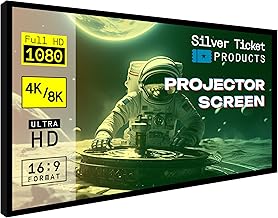
The Silver Ticket Products STR Series 120″ Diagonal provides a robust, wall-mounted solution with an aluminum frame, ensuring a perfectly flat surface for high-definition viewing. At 120 inches, it offers a truly massive picture size suitable for dedicated indoor spaces.
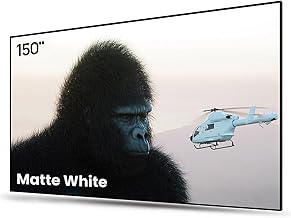
For those needing an even larger display, the AWOL VISION 150-inch Projector Screen Fixed Frame offers a premium viewing experience at 150 inches. This size delivers a truly breathtaking image, ideal for large home theaters or commercial applications where image quality is non-negotiable.
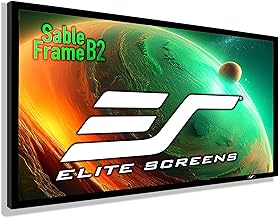
The Elite Screens Sable Frame 150” Fixed Frame is another excellent choice in the large fixed category, providing a sleek, aesthetically pleasing design with a durable surface optimized for 4K/8K content. Its fixed nature guarantees maximum image integrity.
Portable and Outdoor Massive Screens: Flexibility and Fun
Portable screens are the backbone of outdoor movie nights, events, and temporary setups. While they may not offer the perfect flatness of a tensioned fixed frame, modern portable designs have significantly improved, often utilizing tensioning systems within the frame to minimize wrinkles.
Types of Portable Screens (Tripod, Folding Frame, Inflatable)
When selecting a portable massive projector screen, you generally encounter three main types:
- Folding Frame Screens: These use a snap-button or quick-lock frame system. They are generally the sturdiest and offer the best wrinkle-free surface among portable options, often supporting sizes up to 180 inches or more.
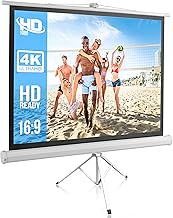
- Screens with Stands (Tripod/Quadrupod): Best for smaller massive sizes (100″ to 120″). They are easy to set up but can be less stable in wind compared to folding frames.
- Inflatable Screens: These are the easiest way to achieve truly gigantic sizes (20+ feet) outdoors. They inflate quickly using an electric blower and are perfect for parties, though they are highly susceptible to wind and require constant power for the blower.
Product Spotlight: Top Portable and Stand Screens
These options cater to the need for a large screen that can be easily transported or stored away:

The TOWOND Projector Screen and Stand (150 inch) is a great mid-range option for large outdoor setups. Its inclusion of a stand and wrinkle-free material makes it practical for backyard cinema events, delivering a massive image without permanent installation.
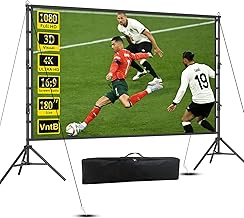
For truly huge portable projection, the VntB 180 inch Outdoor Projection Screen offers a staggering 15-foot diagonal size. This is perfect for large gatherings or events where maximum impact is necessary, featuring a wrinkle-free surface and a portable stand system.
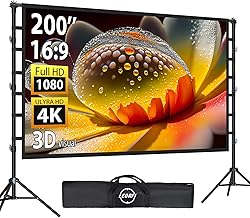
Scaling up further, the LEORFI 200 Inch Outdoor Projector Screen with Stand pushes the limits of portable projection. This enormous screen size is suitable for very large audiences and offers front/rear projection capabilities, maximizing versatility.
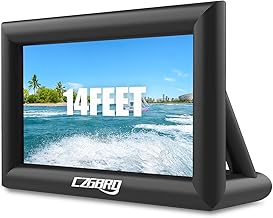
If ease of setup and sheer size are prioritized outdoors, the 14FT Inflatable Projector Screen is a fantastic solution. It blows up quickly and supports both front and rear projection, making it a staple for backyard parties and community events.
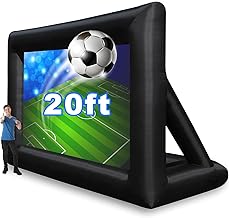
For the ultimate in huge outdoor entertainment, consider the 20 Feet Inflatable Outdoor and Indoor Theater Projector Screen. This gargantuan screen provides an unforgettable viewing experience, instantly transforming any open space into a drive-in cinema.
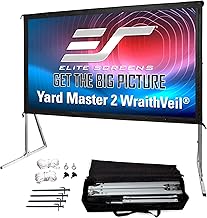
The Elite Screens Yard Master 2 DUAL 120-INCH is a premium portable folding frame screen, offering high-quality construction and a dual surface for both front and rear projection. This screen is built for durability and superior image quality compared to basic inflatable options.
Motorized Screens: The Best of Both Worlds?
Motorized screens offer a compromise between the performance of fixed screens and the concealment of portability. They roll up into a ceiling- or wall-mounted housing when not in use, keeping the room aesthetically clean. High-end motorized screens often include tensioning systems to ensure a flat viewing surface, even at massive sizes.
Benefits of Motorized Screens (Concealment, Tensioning)
The primary benefit is aesthetics; the screen disappears when not in use. For massive sizes (120″ to 150″), look for models with tab-tensioning. This system uses cables or weights along the sides of the screen material to pull it taut, preventing waves and wrinkles that can be distracting on large surfaces.
Product Spotlight: High-Performance Motorized Screens
Motorized screens blend luxury, convenience, and performance, especially in the larger sizes:
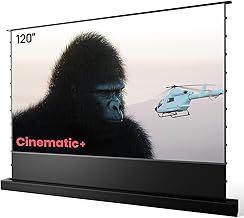
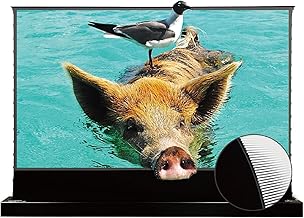
The AWOL VISION 120″ Motorized ALR Floor Rising Projector Screen is a premium, high-tech solution. It rises from the floor, perfect for environments where ceiling mounting is impossible. Crucially, it features Ambient Light Rejecting (ALR) technology, making it suitable for viewing even in rooms with significant light.
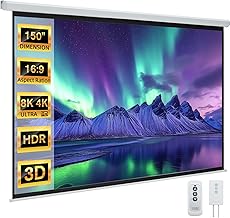
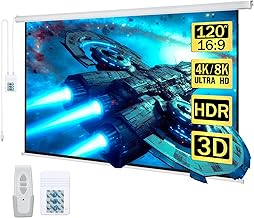
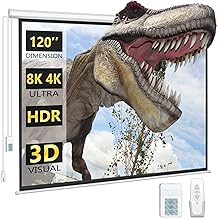
For a massive size combined with the convenience of retraction, the YODOLLA 150″ Projector Screen Motorized is a strong contender. This screen offers a 150-inch diagonal, ideal for large dedicated rooms or auditoriums, easily deploying and retracting with a remote control.
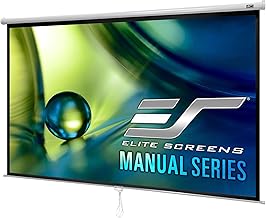
If you prefer a simpler retractable system, the Elite Screens Manual Series, 150-INCH offers a huge viewing area with a reliable manual pull-down mechanism. This is a cost-effective way to achieve a massive, retractable display in a large room.
Crucial Considerations When Buying a Massive Projector Screen
When dealing with a massive projector screen, standard screen rules are amplified. Small imperfections become glaring flaws, and material specifications are more important than ever.
Gain, Viewing Angle, and Ambient Light Rejection (ALR)
Gain: This refers to the screen’s reflectivity. A 1.0 gain is standard white. For massive screens, especially those 150 inches or larger, a gain slightly above 1.0 (like 1.1 or 1.2) can help boost brightness, compensating for the light dispersion over a huge area. However, be cautious, as higher gain often means a narrower viewing angle.
Viewing Angle: On a massive screen, viewers are often spread out. Ensure the screen material offers a wide viewing angle (160 degrees or more) so that the image brightness and color remain consistent even for those sitting off-center.
ALR Technology: For any massive screen used in a living room or multi-purpose space with uncontrolled lighting, Ambient Light Rejecting (ALR) technology is highly recommended. ALR screens dramatically improve contrast and color saturation by minimizing the impact of non-projector light sources.

For portable setups that need to combat light, the ULTIMEA E-ALR Projector Screen with Stand (120 inch) is designed to offer light rejection even in a portable format, maximizing performance outdoors or in brightly lit indoor environments.
Installation and Space Requirements
Installing a massive screen requires precise planning. A 150-inch fixed frame screen is a substantial piece of equipment, demanding sturdy wall mounts and often requiring two people for assembly and installation. Motorized screens require access to electrical wiring, typically hidden within the ceiling or wall structure for a clean look.
For outdoor setups, stability is key. Screens with stands, especially those 150 inches and up, must be secured using ropes, stakes, and sandbags to withstand wind. Inflatable screens, while easier to set up, require continuous power for the blower and are generally less stable in breezy conditions than a framed screen.
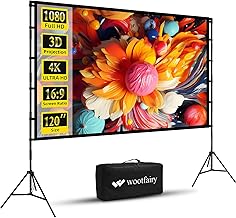
The Wootfairy 120 inch Foldable and Portable Projection Screen is a manageable size for frequent setup and teardown, balancing a large viewing area with practical portability for backyard cinema enthusiasts.
Detailed Examination of Massive Screen Types
Inflatable Screens: Size Without Commitment
Inflatable screens are often the first choice when seeking the absolute largest possible display for temporary events. They are remarkably easy to transport, folding down into a relatively small bag, and inflate in minutes. While they offer huge scale, their surface quality is often inferior to tensioned screens, and they can be distracting in windy conditions due to slight movement.
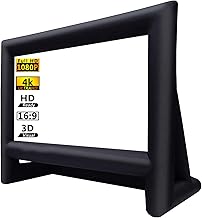
The 16ft Inflatable Movie Screen Outdoor Projector Screen is a popular choice for events, offering a huge, easily deployable surface for both front and rear projection. This is pure massive fun, perfect for large parties or community viewing.
Tensioned vs. Non-Tensioned Screens
For any screen over 100 inches, tensioning becomes essential. Non-tensioned screens, especially simple fabric sheets hung on a wall or a basic frame, are prone to wrinkles and ripples, which are highly visible when projecting high-definition content. Tensioned screens, whether fixed-frame or motorized/portable with tension wires, ensure a perfectly smooth surface for optimal image clarity.
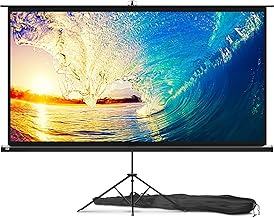
The 100 Inch Indoor and Outdoor Projector Screen with Stand uses a folding tripod system, balancing a massive screen size with the stability offered by a freestanding frame, making it versatile for both indoor presentations and outdoor movie nights.
Extreme Scale: The 200 Inch and 300 Inch Giants
When seeking truly gargantuan projection, the options narrow, and the logistical challenges increase. Screens over 200 inches are typically reserved for auditoriums, church halls, or professional outdoor cinema operations.
Managing Light and Scale at Extreme Sizes
A 300-inch screen requires an exceptionally bright projector to maintain image quality. The light output (measured in lumens) must be significantly higher than for a standard 100-inch screen to prevent the image from appearing dim and washed out. Furthermore, a screen this large requires a viewing distance of at least 30 to 40 feet to prevent viewers from seeing individual pixels.
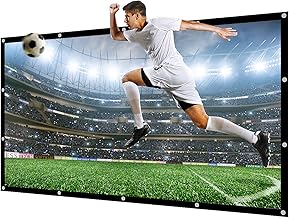
The NIERBO Huge Large Projector Screen 300 inch is one of the largest available non-inflatable fabric screens. While it requires a custom mounting solution (not included), its sheer scale is unmatched for events needing maximum visibility across a huge space.
For a massive size with a frame, the TOWOND 200 Inch Portable Projection Screen with Stand offers an impressive solution for large outdoor venues, combining huge dimensions with a stable, easy-to-assemble frame structure.
Summary of Massive Screen Choices
The ideal choice for a massive projector screen hinges on whether the screen is intended for permanent installation or portability. Fixed frames deliver the best image quality and flatness, while portable screens offer unparalleled flexibility.
If you are building a dedicated home theater, a fixed-frame screen (120″ to 150″) with ALR technology is the superior investment, ensuring a crisp, theater-quality image every time. If your goal is to host large, occasional outdoor events, a sturdy folding frame or a large inflatable screen provides the best combination of size and ease of deployment.
Regardless of the type, always prioritize screen material quality. A high-gain, wrinkle-free, and appropriately tensioned surface is necessary to truly enjoy the impact of a massive screen and maximize the performance of your projector.