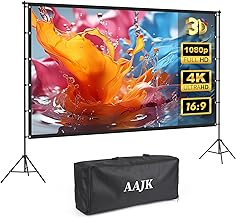
The quest for the perfect home theater often leads enthusiasts down a rabbit hole of customization. When looking at projection surfaces, a common question arises: should I buy a dedicated screen, or can I simply use special paint for projector screen applications? While the idea of painting your wall to create a massive, seamless display is undeniably appealing, the reality of achieving professional-grade image quality is far more complex.
In the world of small space solutions and budget setups, the choice between a DIY painted surface and a purpose-built compact screen becomes critical. This guide explores the effectiveness of projector screen paint, detailing its pros and cons, and contrasts it with the high-performance features available in modern, ready-made compact projection screens. We’ll help you determine the best path to maximize image quality, especially when working within spatial limitations.
The Allure of DIY: Using Projector Screen Paint
The primary motivation for using paint for projector screen projects is often cost savings and the desire for a completely customized size. Instead of being limited by standard screen dimensions, painting allows you to utilize an entire wall, creating a massive cinematic experience tailored exactly to your space.
What is Projector Screen Paint?
Standard wall paint, even matte white, is generally unsuitable for projection because it lacks the necessary reflective properties and surface uniformity. Dedicated projector screen paint is formulated to address these deficiencies. These specialized paints typically contain microscopic reflective particles (like glass beads or metallic flakes) suspended in the medium. The goal is to enhance the brightness and contrast of the projected image by controlling how light is reflected back to the viewer.
These paints come in various colors, most commonly white, gray, or silver. Gray and silver paints are popular choices for rooms with some ambient light, as they help deepen black levels and improve contrast, albeit often at the expense of overall brightness (gain).
Pros and Cons of Painting a Screen
Before committing to a permanent painted solution, it is vital to understand the trade-offs involved compared to investing in a dedicated screen, particularly for small or multi-purpose rooms.
Advantages of Using Paint for Projector Screen
- Cost-Effectiveness: High-quality projection screens can be expensive, especially large models. A bucket of specialized paint is often significantly cheaper, making it an attractive option for budget-conscious builders.
- Custom Size and Aesthetics: Paint allows for a seamless, borderless look that integrates perfectly into the room decor. You can choose any size or aspect ratio imaginable, restricted only by the dimensions of your wall.
- Permanent Solution: Once applied, the screen is always ready for use, eliminating the need to pull down a manual screen or set up a portable frame.
Disadvantages of Using Projector Screen Paint
The disadvantages often relate directly to image quality and consistency, areas where manufactured screens excel.
- Inconsistent Finish: Achieving a perfectly smooth, uniform surface is extremely difficult, even for experienced painters. Any slight imperfection, texture, or uneven application of the projector screen paint will be magnified when light hits the surface, leading to “hot spots” or visible texture (orange peel effect).
- Low Gain and Poor Contrast: While specialized, most DIY paints cannot match the precise gain characteristics or advanced light rejection capabilities of modern screen materials. This is especially true in rooms with any ambient light, where the image can look washed out.
- Permanence: If you move, the screen stays behind. If you want to upgrade your viewing surface, repainting is the only option.
- Lack of ALR (Ambient Light Rejection): True ALR screens use complex optical layers to selectively reject light coming from above (like ceiling lights) while reflecting light from the projector. Paint simply cannot replicate this technology, making painted walls poor performers in anything other than pitch-black environments.
Why Ready-Made Screens Are Superior for Small Spaces
For users seeking high performance, flexibility, and optimized viewing in compact living areas, a dedicated, ready-made screen—especially a portable or compact model—offers significant advantages over relying on paint for projector screen applications.
Performance Metrics: Gain, Viewing Angle, and ALR
A manufactured screen surface is engineered under strict quality control to ensure uniform reflection and specific performance characteristics. These screens are rated by metrics crucial for a quality viewing experience:
- Gain: This measures the reflectivity of the screen. A 1.0 gain screen reflects the same amount of light in all directions. Screens designed for high brightness might have a 1.5 gain, while screens designed for better contrast might have a gain slightly lower than 1.0. Paint is often inconsistent and difficult to measure accurately.
- Viewing Angle: High-gain painted surfaces often suffer from poor viewing angles, meaning the image looks bright directly in front, but rapidly dims as you move off-axis. Dedicated screens maintain brightness and color fidelity across a wider viewing cone.
- Ambient Light Rejection (ALR): This is the game-changer. For small apartments or multi-purpose rooms where light control is impossible, ALR screens dramatically outperform any painted wall by focusing the projected light back to the viewer while absorbing ambient light.
Portability and Installation Ease
The biggest advantage of choosing a manufactured screen for a small space is the flexibility it provides. Whether you need a screen that disappears when not in use or one that can travel with you, compact options eliminate the permanence and hassle associated with a painted wall.
Portable screens, tripod models, and manual pull-down units are designed for quick setup and minimal footprint, making them ideal for renters, dorm rooms, or outdoor movie nights where a permanent fixture is impractical.
Small Space Solutions: The Best Compact Projector Screens
If you have decided that the superior performance and flexibility of a dedicated screen outweigh the minor cost savings of projector screen paint, focusing on compact and portable options is essential for small spaces. These models deliver excellent 4K and HD performance without demanding a permanent installation or massive footprint.
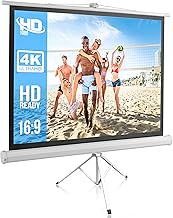
Top Picks for Ultra-Portable Setup (Tripod/Folding Screens)
These screens are perfect for those who need a large display only occasionally, or who want the flexibility to move their viewing area from the living room to the backyard.

Pyle 50 Inch Portable Projector Screen with Tripod Stand (PRJTP52)
For the smallest spaces, a 50-inch screen offers surprising portability and ease of storage. This Pyle model features a durable tripod stand and a matte white surface, ideal for presentations or casual movie viewing in a very controlled light environment. Its compact size means it can be tucked away easily when not in use, solving the problem of screen permanence inherent in paint for projector screen solutions.

Portable Projector Screen with Stand Outdoor: Camping Projection Screen 80 inch
Moving up slightly in size, this 80-inch screen hits a sweet spot for portability and viewing impact. It’s designed for quick outdoor setup (camping, backyard), but its lightweight frame and included carry bag make it equally useful for indoor setups where space is tight. The 4K HD compatibility ensures a sharp image, something that can be difficult to achieve reliably with projector screen paint.
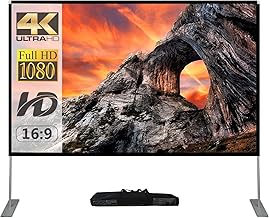
SKERELL Outdoor Projector Screen with Stand 100 Inch
The 100-inch size is generally considered the standard entry point for a truly immersive home theater experience. This portable option from SKERELL offers the scale of a fixed screen but with the convenience of a stand, making it a great temporary or semi-permanent solution for small apartments or multi-use dens. The ease of tear-down and setup provides flexibility that paint simply cannot match.

Taotique Projector Screen 72 inch
For extreme portability and budget constraints, fabric screens like this 72-inch model are excellent. They fold down incredibly small and are wrinkle-resistant, perfect for hanging on any wall or temporary frame. While this is closer to a DIY screen in material simplicity, the uniformity and dedicated viewing surface far surpass a typical paint for projector screen application, especially given the low price point.

Elite Screens Tripod B, 50-INCH 1:1
Elite Screens is a respected name in projection, and this small, square 50-inch tripod screen is built for quality presentations or small-group viewing. The 1:1 aspect ratio offers versatility, and the lightweight, pull-up design ensures effortless deployment and storage. This is a highly specialized piece of equipment that provides superior image fidelity compared to any DIY painted wall.

SKERELL Outdoor Projector Screen with Stand: 60 inch
A great option for maximizing screen size in a truly minimal space. The 60-inch diagonal is large enough for satisfying viewing but small enough to fit comfortably in tight corners or small bedrooms. The inclusion of a stand means you don’t have to worry about wall mounting, making it a truly flexible, non-permanent solution.
Best Compact Fixed or Manual Pull-Down Screens
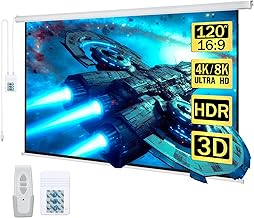
If your small space allows for a semi-permanent installation, a manual pull-down screen is the ideal choice. It offers the performance of a fixed screen but rolls discreetly away when not needed, preserving the room’s aesthetic—a major advantage over a permanently painted wall.

VIVOHOME 80 Inch 16:9 Pull Down Projector Screen
This VIVOHOME model is perfect for small home theaters or offices. The 80-inch diagonal is large enough for comfortable viewing, and the manual pull-down mechanism with auto-locking ensures easy deployment and retraction. Because it mounts to the ceiling or wall, it saves floor space, providing a clean look superior to a wall covered in projector screen paint.
Portable Projector Screen with Stand, 80 Inch (Mobile and Compact)
Another excellent 80-inch option emphasizing mobility. This screen uses fiberglass material for improved rigidity and projection quality compared to cheap vinyl or a painted wall. It comes complete with a stand and carrying bag, demonstrating that high-quality viewing doesn’t require permanent installation or messy DIY solutions like paint for projector screen projects.

100 Inch Indoor and Outdoor Projector Screen with Stand (HD Premium)
For those needing a larger image but still requiring portability, this 100-inch premium folding screen offers exceptional stability and wrinkle-free performance. It’s a great compromise between a permanent fixed frame and a lightweight tripod model, suitable for serious movie nights both indoors and out.
Budget-Friendly and Fabric Options
If budget is the primary concern, these fabric screens offer a huge improvement over a painted wall without the high cost of motorized or framed screens. They provide a standardized, uniform surface designed specifically for projection.

Projector Screen 84 inch, DUYIKJ Portable Black Backing
This screen is a fantastic alternative to paint for projector screen DIY projects. It includes a black backing, which prevents light bleed-through if placed against a bright wall or window. This feature alone dramatically improves contrast compared to painting directly onto a wall, offering a superior image for a minimal investment.

AAJK Projector Screen 100 inch (Washable, Anti-Crease)
A highly versatile and affordable solution. This fabric screen is foldable and washable, making maintenance simple. Its anti-crease material ensures a flat surface, which is crucial for high-definition viewing—a major weakness of amateur wall painting projects.
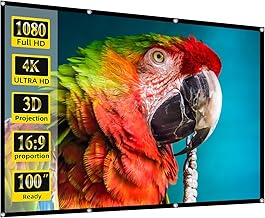
Projector Screen, 100 inch Movie Projector Screen (Foldable Portable)
At a very low price point, this screen proves that a dedicated surface doesn’t need to break the bank. It offers a 100-inch viewing area with standardized gain and aspect ratio, ready to hang. This is a far more reliable and consistent option than mixing and applying your own projector screen paint.
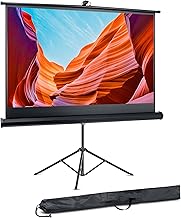
Pyle 60 Inch Portable Projector Screen with Tripod Stand
Ideal for impromptu presentations or small home setups where space is severely limited. The 60-inch screen is small enough to fit almost anywhere and the tripod provides immediate stability without wall mounting. It’s an excellent choice for maximizing screen real estate in a confined area without the commitment of painting.

Elite Screens Tripod Series, 72-INCH 16:9
Another high-quality tripod offering, this 72-inch screen is versatile for both indoor and outdoor use. The tripod design is stable and easy to adjust, providing a professional viewing surface quickly and efficiently. For small spaces, the ability to pack up the screen completely is a huge benefit over a permanent painted wall.

Projector Screen with Stand 100 inch 16:9 HD 4K Outdoor Projector Screen
This folding screen with a stand is engineered for quick assembly, making it a favorite for outdoor cinema enthusiasts, but equally useful for temporary indoor setups. The wrinkle-free material ensures that the 4K HD image quality remains pristine, eliminating the visual distortions common with poorly applied paint for projector screen projects.
Factors to Consider When Choosing a Compact Screen
When selecting a compact screen, moving beyond the DIY impulse of projector screen paint means considering technical specifications that directly impact your viewing environment.
Size and Aspect Ratio (16:9 vs. 4:3)
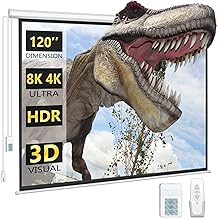
For modern cinema and streaming, a 16:9 aspect ratio is standard. For business presentations or older media, 4:3 might be preferable. In a small space, choosing the appropriate size is crucial. While a 120-inch screen offers immersion, a 72-inch or 80-inch screen may be a better fit to avoid overwhelming a small wall or forcing the projector to be placed too close to the surface, which can distort the image.
Consider the viewing distance: In small rooms, you sit closer to the screen. If the screen is too large (or the material quality is poor, as with DIY paint), you may notice individual pixels, reducing the perceived image quality.
Ambient Light Rejection (ALR)
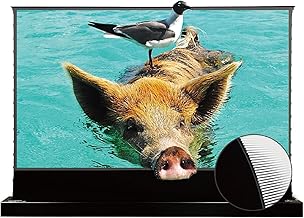
If your viewing space is a living room or multi-purpose area that cannot be completely darkened, Ambient Light Rejection (ALR) technology is indispensable. ALR screens are chemically and structurally designed to deflect light coming from non-projector angles (like windows or ceiling lights) while amplifying the light coming from the projector.
While ALR screens are generally more expensive, they provide performance in bright rooms that no standard white or gray paint for projector screen can ever hope to achieve. For serious movie viewing in a non-dedicated home theater, ALR is a worthwhile investment that completely justifies opting for a manufactured screen over a DIY solution.
The Verdict: Performance Trumps DIY Cost Savings
The initial appeal of using paint for projector screen applications is understandable: it seems cheaper and offers infinite customization. However, the performance limitations, especially concerning light gain, contrast uniformity, and ambient light rejection, make it a poor substitute for a dedicated screen, particularly if you are projecting HD or 4K content.
For those operating within small spaces, the market offers numerous compact and portable screens that deliver professional-grade picture quality, quick setup, and the flexibility to put the screen away when not in use. Investing in a quality, purpose-built screen—even a compact one—ensures you get the best possible image fidelity from your projector, maximizing your home theater experience without the permanent commitment or visual flaws of a painted wall.
Choose performance, choose portability, and leave the paint for the trim.