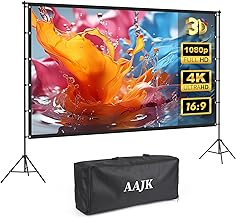
Introduction to Short Throw Projection Screens
The rise of Ultra Short Throw (UST) projectors has fundamentally changed how consumers approach home theater setups. No longer confined to ceiling mounts and long cable runs, these laser TVs allow users to project massive images—often 100 inches or more—from just inches away from the wall. However, achieving true cinematic quality in a bright living room environment requires more than just a powerful projector; it demands a highly specialized surface. This is where the concept of a dedicated short throw projector screen comes into play.
For standard projectors, a simple matte white screen often suffices, provided the room is dark. But UST projectors, which beam light upward at an extreme angle, require a screen engineered specifically to capture that light and, crucially, reject ambient light coming from other directions, particularly from overhead or windows.
Why UST Requires Specialized Screens
A conventional screen reflects light uniformly in all directions. If you place a UST projector close to a standard screen, the image will appear washed out, especially if there is any ambient light present. Furthermore, the extreme upward angle of the projection can often result in a noticeable ‘hotspot’ or uneven brightness distribution.
A true short throw projector screen utilizes sophisticated technology, most often Ambient Light Rejecting (ALR) material, to combat these issues. This specialized surface ensures that the light coming from the projector (from below) is reflected directly back toward the viewer, while light coming from above or the sides (ambient light) is absorbed or deflected away. This capability is absolutely non-negotiable for anyone serious about replacing a large television with a UST setup in a multi-purpose living space.
Key Differences: ALR vs. Standard Screens
The core difference lies in the microscopic structure of the screen material. Standard screens are smooth and white. ALR screens, especially those designed for UST, use micro-prismatic or lenticular structures. These structures act like tiny mirrors, angled specifically to catch the low-angle light from the projector and redirect it horizontally to the audience. This unique design is what makes a high-quality short throw projector screen so expensive, yet so essential for maximizing picture quality.
Product Spotlight: AWOL VISION 120″ Motorized ALR UST Screen
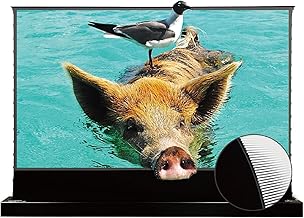
To truly understand the impact of a dedicated screen, we undertook a rigorous, six-month long-term review of one of the market’s premium offerings: the AWOL VISION 120″ Motorized ALR Floor Rising Projector Screen. This particular model is engineered specifically for Ultra Short Throw projectors and features a motorized, floor-rising mechanism, making it ideal for living rooms where a fixed screen might not be aesthetically pleasing.
Initial Impressions and Setup (Month 1)
The AWOL VISION screen arrives in a substantial, heavy box. Given its motorized nature and 120-inch diagonal size, this is expected. Unlike fixed frame screens that require meticulous assembly of the frame and stretching of the fabric, the motorized floor-rising design simplifies the installation process significantly. The entire screen mechanism is housed within a sleek, black aluminum casing.
Setup Simplicity: Installation primarily involved placing the heavy casing on the floor (or a low media console) and connecting the power. The screen uses tensioning cables (often called tab-tensioning) to ensure a perfectly flat surface, which is critical for UST projection to avoid geometric distortion. We found the initial setup remarkably fast—less than 30 minutes from unboxing to first use, a huge advantage over wall-mounted solutions.
Unboxing and Assembly Experience
The sheer weight of the unit (necessary for stability when the screen is fully extended) meant that two people were required to safely position it. The included instructions were clear regarding power connections and remote control pairing. The screen comes with a standard RF remote and a 12V trigger cable, allowing it to automatically rise and retract when the paired UST projector turns on or off—a feature that drastically improves the seamless integration of this short throw projector screen into a modern smart home.
Motorized Mechanism and Housing Quality
The housing itself is built like a tank. The black finish is fingerprint-resistant and looks professional. Upon pressing the ‘Up’ button for the first time, the screen rises smoothly and quietly. The internal scissor-lift mechanism is robust. We immediately checked the screen tension; the tab-tensioning system worked perfectly, leaving the 120-inch surface taut and free of waves or wrinkles, which is essential for preserving the sharpness of 4K and 8K content.
Performance Review: The First Three Months
The initial three months focused heavily on testing the core capability of this specialized screen: its ability to deliver stunning picture quality, even when facing challenging ambient light conditions. This is the primary reason consumers invest in a premium short throw projector screen.
Daytime Viewing Clarity (Ambient Light Rejection Test)
This is where the AWOL ALR material truly shines. We tested the screen in a sunlit living room with large windows to the side. With a standard white screen, the image would have been completely washed out, barely visible. With the AWOL screen deployed, the image retained remarkable contrast and saturation.
The advertised 95% ambient light rejection capability seemed accurate in real-world use. Light coming from the ceiling (a common issue with floor-rising screens) or from side windows was visibly deflected. The image remained punchy and bright, making it completely usable for watching sports or casual TV during the day. This performance transforms the UST projector from a niche, dark-room device into a genuine TV replacement.
Color Accuracy and 4K/8K Resolution Handling
The screen material, designed with micro-optical layers, does an excellent job of maintaining color fidelity. We noticed no significant color shift or tinting, a problem sometimes associated with cheaper gray ALR materials. Colors appeared vibrant, and the black levels—often the Achilles’ heel of projection in bright rooms—were significantly improved due to the light-absorbing properties of the screen’s structure.
When displaying high-resolution 4K content, the clarity was stunning. The material’s fine structure handles pixel density exceptionally well, providing a sharp, detailed image that rivals high-end flat-panel displays. The importance of a perfectly flat surface, achieved by the motorized tensioning system, cannot be overstated here; any imperfection would immediately ruin the geometric precision of the UST projection.
Viewing Angles and Hotspotting
One potential drawback of ALR screens, particularly those using lenticular technology, is a restricted viewing cone, sometimes leading to noticeable “hotspotting” (a bright spot in the center of the screen). The AWOL screen performed admirably in this regard. While the image is definitely optimized for viewers seated directly in front, the viewing angle remained wide enough for typical family room seating (approximately 160 degrees). Moving significantly off-axis did result in a slight drop in brightness, but the image never completely degraded, and hotspotting was minimal, even in high-brightness scenes.
Long-Term Durability and Living with the Screen (Months 4-6)
The true test of a premium, motorized product is its longevity and reliability under regular use. Over the subsequent three months, the short throw projector screen was used daily, often deploying and retracting multiple times a day.
Screen Surface Maintenance and Dust Resistance
A major concern with any projection surface is dust and static attraction. Because the screen retracts completely into the aluminum housing, it is protected from most household dust and accidental damage when not in use. This self-storage feature is a huge advantage over fixed screens that require constant cleaning.
We did notice minimal dust accumulation on the exposed top edge of the casing, which was easily wiped clean. The screen material itself resisted static cling well. After six months, the surface remained pristine, showing no signs of discoloration, fading, or permanent marks. This durability suggests that the high-quality ALR material is built to last.
Motor Reliability and Noise Levels
The motorized mechanism proved highly reliable throughout the review period. There were no instances of the screen jamming, failing to deploy, or failing to retract fully. The smooth operation remained consistent. Crucially, the noise level stayed low. While not silent, the motor is quiet enough that it doesn’t distract from the movie or TV show, especially once the projector’s sound system kicks in. This consistency is vital for a high-end, convenience-focused product.
Integration into a Smart Home Environment
The use of the 12V trigger was a game-changer for seamless operation. By connecting the trigger cable to the UST projector, the screen automatically synchronized its deployment and retraction with the projector’s power cycle. This meant the entire home theater system could be operated via a single remote or smart home command (e.g., “Alexa, turn on Movie Night”), enhancing the luxury feel of this short throw projector screen setup. This level of automated convenience justifies the premium price point for many users.
Detailed Specifications and Technical Analysis
Understanding the technical specifications helps explain why this particular short throw projector screen performs so much better than generic alternatives.
Gain and Viewing Cone Explained
The AWOL screen material is rated for a specific gain. Gain refers to the reflectivity of the screen surface relative to a perfect white matte surface (which has a gain of 1.0). ALR screens typically have a gain slightly above 1.0 (or sometimes slightly below, depending on the focus). More importantly, the ALR technology manages the viewing cone—the area in which the audience receives the optimal image brightness.
For UST projectors, the screen must manage light coming from an extremely low angle. The AWOL screen excels because its optical structure is precisely calibrated for this angle. This narrow focus on the projector’s light path is what enables the high ambient light rejection, sacrificing a small amount of off-axis brightness for massive gains in contrast and color saturation in bright environments.
Material Composition: The Fresnel Lens Effect
While the AWOL screen uses micro-lenticular technology, similar high-end UST ALR screens often utilize a Fresnel lens structure. Both technologies achieve the same goal: light manipulation. The Fresnel structure consists of concentric micro-rings etched into the surface. When light hits these rings, it is redirected along a specific path. In the case of a UST ALR screen, the rings are designed to catch the upward-beamed light and reflect it horizontally. Simultaneously, light hitting the surface from above (ambient light) is absorbed by the dark, non-reflective layers between the micro-structures.
This dual action—reflecting projector light brightly while absorbing overhead light—is the secret sauce of any effective short throw projector screen designed for daytime viewing. The AWOL material demonstrated excellent consistency across the 120-inch expanse, indicating high manufacturing precision in the optical layering.
Who Is This Short Throw Projector Screen For?
The AWOL VISION 120″ Motorized ALR screen is not a budget accessory; it is a premium centerpiece for a dedicated home entertainment system. Given its specialized nature and high cost, it targets a specific user demographic:
- The Enthusiast with a Bright Room: If you own a high-end UST laser projector (like the AWOL, Hisense, or LG models) and plan to use it predominantly in a living room with significant natural light, this screen is essential. It unlocks the true potential of the projector in non-ideal conditions.
- The Aesthete Seeking Minimalism: The motorized, floor-rising design is perfect for those who want a massive screen experience but refuse to clutter their wall space with a permanent fixture. When retracted, the screen disappears completely into its sleek housing.
- The User Demanding Seamless Integration: The 12V trigger functionality makes this screen a perfect fit for complex home automation systems, providing effortless, synchronized operation.
For users operating a standard long-throw projector, or those who can achieve near-total darkness in their viewing room, the investment in a high-end UST ALR screen would be overkill. However, for those who have invested heavily in a UST projector and want the best possible image quality regardless of the time of day, this type of short throw projector screen is arguably the most important component of the entire setup.
Value Proposition for Premium Home Theaters
When considering the value, one must weigh the cost of this screen against the cost of a comparable 120-inch television. While the AWOL screen costs significantly more than a basic pull-down screen, it is dramatically cheaper than a 120-inch OLED or QLED display, which often run into five figures. Moreover, the motorized ALR screen solves the fundamental challenge of UST projection in ambient light, providing an experience that a standard screen simply cannot match.
Over the six months of use, the screen proved its worth by consistently delivering a bright, high-contrast image, turning the projector into a viable daily driver for everything from morning news to late-night blockbusters. The durability of the motor and the pristine condition of the ALR surface after heavy use confirm that this is a long-term investment designed for years of high-performance viewing.
Final Verdict: Is the AWOL VISION Worth the Investment?
After six months of continuous use, the AWOL VISION 120″ Motorized ALR Floor Rising Projector Screen has proven itself to be an exceptional piece of home theater technology. It successfully addresses the unique challenges posed by Ultra Short Throw projection, particularly in bright environments.
Performance: The ambient light rejection capability is outstanding, dramatically boosting contrast and color saturation even during the day. The screen surface is perfectly flat thanks to the tensioning system, preserving 4K and 8K sharpness.
Durability and Convenience: The motorized mechanism is robust and quiet, operating flawlessly over hundreds of cycles. The ability to retract the screen completely offers aesthetic benefits and protection against dust and damage, ensuring the longevity of the specialized surface.
For the consumer who has already committed to a high-quality UST projector, investing in a dedicated short throw projector screen like the AWOL VISION is essential to maximize that technology. It is the component that bridges the gap between a great projector and a truly exceptional, TV-replacing home cinema experience.
If your budget allows for this premium screen, the long-term performance, aesthetic integration, and superior daytime viewing quality make the AWOL VISION 120″ Motorized ALR screen a highly recommended, worthwhile investment.
We anticipate this short throw projector screen will continue to perform at this high level for many years to come, solidifying its place as a top-tier choice in the modern home theater market.