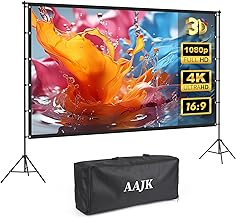
Building a dedicated home theater is the dream of many cinephiles, offering a truly immersive viewing experience far surpassing standard television setups. However, the path to cinematic bliss often involves navigating a complex landscape of technology, specifications, and, most importantly, cost. The centerpiece of any projection-based system is the symbiotic relationship between the home theater projector and screen.
Choosing the right combination is not simply about picking the largest screen and the brightest projector; it is a delicate balance where the screen material, gain, and ambient light rejection capabilities must perfectly complement the projector’s output, resolution, and throw distance. This guide offers a comprehensive comparison between luxury and budget setups, helping you understand where to invest your money to maximize performance for your specific viewing environment.
The Essential Partnership: Projector and Screen Synergy
A projector generates light and image data, but the screen is what truly defines the final picture quality. A high-quality projector paired with a subpar screen will deliver disappointing results, and conversely, a budget projector cannot magically produce stunning images on an expensive screen if its core capabilities are lacking. The two must be matched based on your room’s characteristics.
Projector Technology: The Engine of the Experience
Modern home theater projectors rely primarily on three technologies, each impacting cost and performance:
DLP (Digital Light Processing)
DLP projectors use tiny mirrors (DMD chips) to reflect light. They are known for excellent contrast, sharp images, and portability. High-end DLP models often use multiple chips to eliminate the “rainbow effect” sometimes visible in single-chip budget models.
LCD (Liquid Crystal Display)
LCD projectors use three separate LCD panels (one for red, green, and blue) to create the image. They typically offer higher brightness and better color saturation than entry-level DLP, but their contrast ratio may suffer in very dark scenes.
LCOS (Liquid Crystal on Silicon)
LCOS (often marketed as SXRD by Sony or D-ILA by JVC) is the luxury choice. These projectors combine the best aspects of DLP and LCD, offering exceptional native contrast ratios, deep blacks, and seamless image quality, making them ideal for dedicated, light-controlled home theaters.
Screen Technology: The Canvas for Quality
The screen is often overlooked but is arguably the most critical component for optimizing image quality. Key screen metrics include:
Gain and Viewing Angle
Gain refers to the screen’s reflectivity. A gain of 1.0 is neutral (reflects light equally in all directions). A high-gain screen (e.g., 1.5) makes the image brighter but narrows the viewing angle, meaning people sitting off-center will see a dimmer picture. Low-gain screens (e.g., 0.8) absorb more light, deepening black levels, but require a brighter projector.
Ambient Light Rejection (ALR)
ALR screens are a game-changer for rooms that are not fully light-controlled (like living rooms). These screens use micro-structures to specifically reflect light coming from the projector (usually below or above the screen) while absorbing light coming from the sides or ceiling. This technology is a significant factor in the cost difference between budget and luxury setups.
Price Point Comparison: Luxury vs. Budget Screens
To illustrate the difference in performance and price, we will examine two 120-inch diagonal projection screens: a high-end, motorized ALR screen designed for cinematic perfection, and a budget-friendly, portable screen built for versatility.
Luxury Choice: AWOL VISION 120″ Motorized ALR Floor Rising Projector Screen
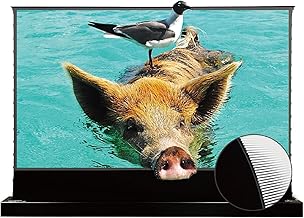
The AWOL VISION 120″ Motorized ALR Floor Rising screen represents the pinnacle of convenience and performance for Ultra Short Throw (UST) projection systems. Its premium price tag reflects advanced technology and sophisticated mechanics.
Key Features of the Luxury Screen
- ALR Technology: This screen is specifically engineered for UST projectors, featuring a material that rejects up to 95% of ambient light. This allows for stunning, vibrant images even in moderately lit rooms, eliminating the need for a pitch-black dedicated theater.
- Motorized Floor Rising Design: The screen rises from a sleek floor-standing cabinet, providing a clean aesthetic when not in use. This motorized, tensioned system ensures a perfectly flat, wrinkle-free surface every time, which is crucial for 4K and 8K resolution clarity.
- Tensioning System: High-end screens utilize robust tensioning wires or tabs along the edges to prevent warping, rippling, or wrinkles—defects that become highly noticeable on large, high-resolution displays.
- Price Point: Typically around $2,199.00, reflecting the precision engineering, ALR material cost, and motorized mechanism.
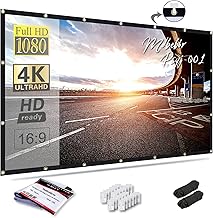
Budget Choice: Mdbebbron 120 inch Projection Screen
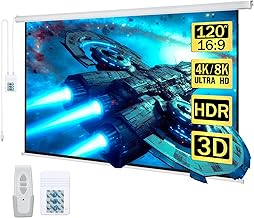
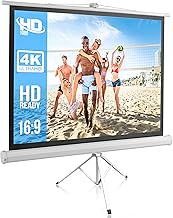
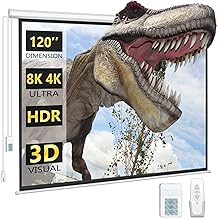
The Mdbebbron 120 inch Foldable Anti-Crease Portable Projector Screen is a fantastic option for those prioritizing size and portability over absolute image perfection. It is the definition of value in the projection world.
Key Features of the Budget Screen
- Material and Portability: This screen is made from a lightweight, foldable polyester fabric, often marketed as “anti-crease.” It is designed for easy transport and setup, making it perfect for backyard movie nights or temporary indoor setups.
- Gain and Viewing Angle: Typically features a standard 1.0 to 1.1 gain white matte surface. This offers a wide viewing angle, meaning the image looks consistent across the entire audience, though it is highly susceptible to ambient light washout.
- Installation: Designed to be hung via hooks or ropes, it lacks the rigidity and tensioning of luxury models. While advertised as anti-crease, minor imperfections or waves are common once hung.
- Price Point: Extremely affordable, often priced under $30.
Head-to-Head Screen Comparison Summary
| Feature | Luxury (AWOL ALR) | Budget (Mdbebbron) |
|---|---|---|
| Price | High ($2,000+) | Very Low (Under $30) |
| Ambient Light | Excellent rejection (95%) | Poor resistance (Requires dark room) |
| Installation | Motorized, floor-rising, permanent | Portable, hook/rope mounting, temporary |
| Image Flatness | Perfectly tensioned, flawless | Prone to wrinkles and waves |
| Projector Pairing | Optimized for Ultra Short Throw (UST) | Works best with standard throw, high lumens |
Projector Selection Strategy: Matching the Machine to the Canvas
The screen choice dictates the required specifications of your home theater projector. Matching these components correctly ensures optimal performance and prevents costly mistakes.
Projector Needs for a Luxury ALR Setup
Since the luxury screen (like the AWOL) is a motorized, floor-rising ALR model, it implies a few things about the projector needed:
Ultra Short Throw (UST) Projectors
Floor-rising screens are almost exclusively paired with UST projectors, which sit directly below the screen and project upwards. These projectors must be high-resolution (4K or simulated 4K) and offer extremely high brightness (often 2,500 to 4,000+ ANSI lumens) to overcome the remaining ambient light and utilize the ALR screen’s efficiency.
Color Fidelity and Contrast
Luxury setups demand projectors with exceptional color accuracy (often supporting the DCI-P3 color gamut) and deep contrast ratios. Since the screen is perfectly flat and highly efficient, any image flaw from the projector will be magnified. Laser light sources are often preferred here for their longevity and instant full brightness.
Projector Needs for a Budget Setup
A simple, foldable budget screen requires a different projector approach, focusing on flexibility and raw power.
High Lumen Standard Throw Projectors
Because the budget screen offers minimal light rejection, the projector must compensate by being very bright. You will need a standard or short-throw projector with high ANSI lumen output (ideally 3,000+ lumens) if you plan to use it outside or in a non-darkened room. Since the viewing area is often temporary (like a backyard), portability in the projector is also a major plus.
Resolution Trade-Offs
In a budget setup, you may prioritize a larger image size over native 4K resolution. Many affordable 1080p projectors offer excellent performance for casual viewing. The slight imperfections or wrinkles inherent in a budget screen material often make the visual difference between native 4K and upscaled 1080p less noticeable anyway.
Advanced Considerations for the Home Theater Environment
Beyond the primary components, several environmental factors influence whether a luxury or budget system will meet your expectations.
Ambient Light Control
If your room has large windows or is adjacent to a bright kitchen, investing in a high-quality ALR screen is mandatory, pushing you toward the luxury end of the screen spectrum. If your room is a dedicated, windowless cave (a ‘bat cave’), a high-quality matte white screen (which is cheaper than ALR) paired with a high-contrast LCOS projector might deliver superior black levels and cinematic depth, even if the screen itself isn’t motorized or ALR.
Aesthetics and Installation
The screen choice heavily impacts the room’s aesthetics. A budget screen is typically hung temporarily and rolls up or folds away into a bag, leaving your wall bare. Luxury options offer three main aesthetic choices:
Fixed Frame Screens
These provide the best flatness and mimic a giant TV, but they are permanently mounted and always visible. They are excellent for dedicated rooms.
Motorized Recessed Screens
Installed flush into the ceiling, these screens disappear completely when not in use, offering the cleanest look possible (like the AWOL floor-rising model, but from the ceiling). This requires professional installation and significant structural work.
Tensioning Mechanisms
Only luxury screens feature advanced tensioning systems (either tab-tensioned or fixed frame). This is crucial for maintaining geometry and image integrity, especially with high-pixel-density 4K and 8K content.
Total System Cost Analysis
When comparing the total investment, the screen is often a small percentage of the total budget, but its impact is immense. Here is a typical breakdown:
Luxury Home Theater Setup Estimate
- Projector: High-end UST Laser Projector (4K, 3000+ Lumens): $3,000 – $6,000
- Screen: 120″ Motorized ALR Screen (AWOL): $2,199.00
- Audio: 7.1.4 Dolby Atmos System (Receiver, Speakers, Subs): $5,000 – $15,000+
- Installation/Cabling: $500 – $2,000
- Total Estimated Cost: $10,699 – $25,199+
In this scenario, the user is investing in seamless integration, daylight viewing capability, and absolute fidelity. The high cost of the screen is justified by its ability to transform the viewing environment and complement the high-performance projector.
Budget Home Theater Setup Estimate
- Projector: Entry-level 1080p/Upscaled 4K Projector (3000+ Lumens): $300 – $700
- Screen: 120″ Foldable Portable Screen (Mdbebbron): $26.98
- Audio: Basic Soundbar or 2.1 Speaker System: $100 – $300
- Installation/Cabling: DIY setup, simple hooks: $10 – $50
- Total Estimated Cost: $436.98 – $1,050
This budget setup is perfect for casual movie nights, gaming, or outdoor use where portability and low initial cost are the primary drivers. While the image quality won’t match the luxury setup, the massive screen size still provides a compelling, immersive experience for the price.
Deep Dive: Why the Price Gap Exists in Screens
The difference between a $27 screen and a $2,200 screen of the same size is staggering. Understanding what you pay for is key to making an informed decision about your home theater projector and screen investment.
Material Science and Optical Coating
Luxury screens use complex optical coatings, often involving multiple layers of microscopic reflective and absorbent materials. These materials are engineered to specific gain and viewing characteristics, often achieving features like ALR or Acoustic Transparency (allowing sound to pass through the screen). The precision required to manufacture a perfectly uniform 120-inch ALR surface without flaws is immense, driving up the cost significantly.
Budget screens, conversely, are typically made of simple matte white polyester or PVC. While they reflect light adequately, they offer no specialized light management, meaning they scatter all light equally, including stray ambient light.
Mechanical Complexity and Durability
The Mdbebbron screen is a simple sheet of fabric. The AWOL screen includes a high-torque motor, remote control integration, a tensioning system, and a robust, aesthetically pleasing casing. The mechanics alone account for a major portion of the luxury price. The precise engineering ensures the screen rises and retracts smoothly thousands of times without tearing or wrinkling.
Maximizing Performance at Any Budget
Regardless of whether you choose a luxury or budget system, certain optimization strategies can enhance your viewing experience.
For the Budget Setup
If you opt for an affordable screen like the Mdbebbron, you must focus entirely on light control. Invest in blackout curtains or use the setup exclusively at night. Position the projector carefully to minimize keystone correction (digital image manipulation that reduces quality) and ensure the screen material is stretched as tightly as possible to reduce waves or ripples that distort the image.
For the Luxury Setup
If you invest in a high-end ALR screen and UST projector, ensure your room setup matches the screen’s requirements. ALR screens are directional; they are designed to reject light from specific angles (usually the ceiling). Make sure your lighting fixtures are positioned correctly, or ideally, use dimmable side sconces rather than overhead lighting when viewing.
Final Verdict: Choosing Your Home Theater Path
The choice between a luxury and a budget home theater projector and screen setup boils down to your primary use case and tolerance for ambient light.
Choose Luxury If:
- You require a system for daytime viewing or use in a non-dedicated living room.
- You demand the highest possible image fidelity, contrast, and color accuracy (4K/8K viewing).
- Aesthetics and seamless integration (like a hidden motorized screen) are paramount.
- You are pairing the screen with a high-end UST or LCOS projector.
Choose Budget If:
- Your viewing is primarily limited to outdoor movie nights or indoor use in a completely dark room.
- Portability and ease of setup are more important than absolute image perfection.
- You are satisfied with 1080p resolution and lower overall contrast.
- Cost is the overriding factor, and you need a massive screen size for minimal investment.
Ultimately, the perfect home theater experience is achieved when the projector and screen work in harmony, tailored precisely to the room and the expectations of the viewer. Understanding the fundamental differences in technology—especially the massive leap in performance offered by modern ALR screen materials—allows you to allocate your budget wisely, ensuring every dollar contributes meaningfully to your cinematic enjoyment.